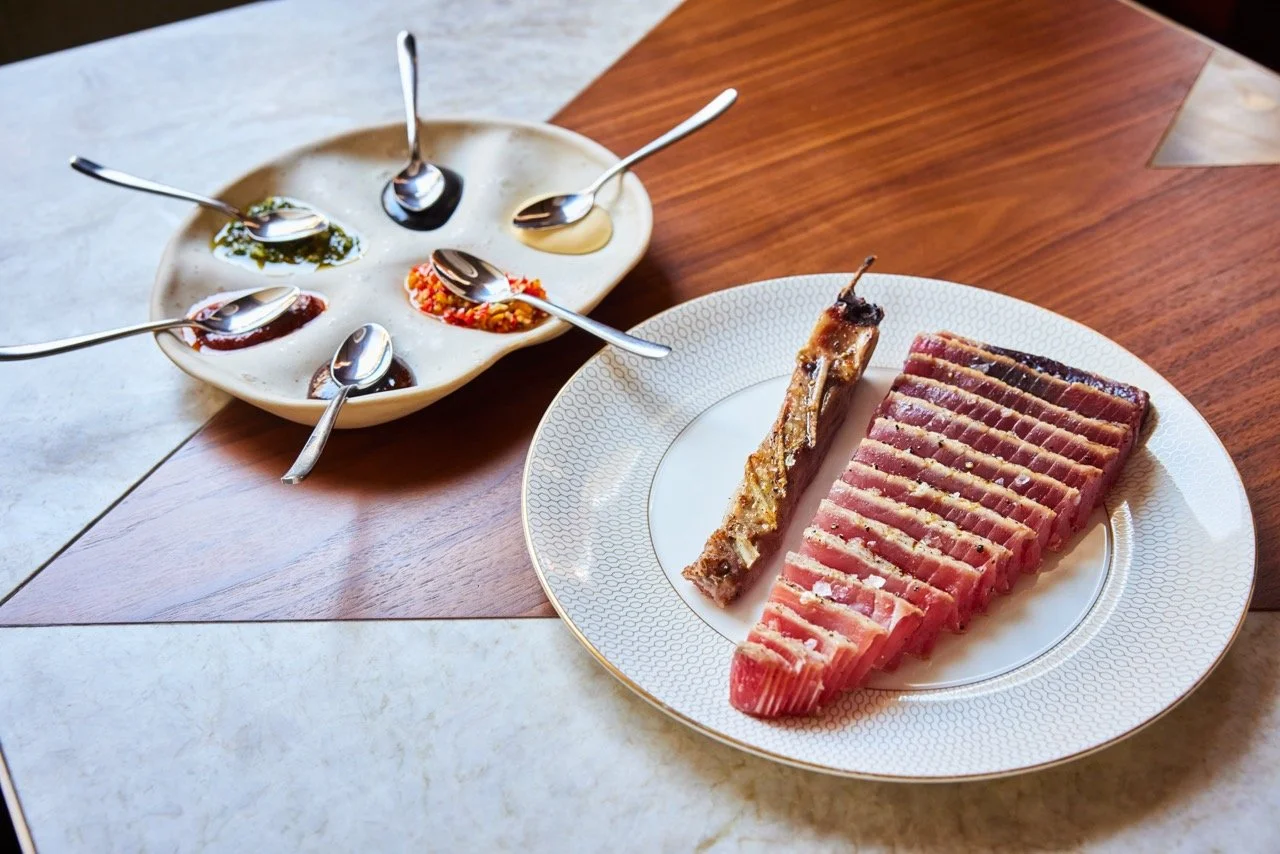
14-Day dry-aged yellowfin tuna rib eye and condiments - Saint Peter
“When we buy tuna, we always buy the whole fish. As you can imagine, we bought very little tuna in the early days, with the original Saint Peter being quite a small restaurant with a small coolroom.
I remember receiving our first whole fish and feeling very nervous about how expensive it was, and how precious it was to have something so significant in our care. By applying our butchering practice of only cutting fish off the bone when we intended to use it, we were able to see how the flesh matured as each loin was used, along with the head, collar and tails. Finally we reached the last loin, which had the full spinal column in place and the remaining frame of the fish covering both sides of the flesh.
On inspection, it looked nearly identical to a beef sirloin. Once I worked out that I could recover the extending ribs from the opposite side by being more careful when processing, it actually looked like a rib of beef.
This aligned with my previous epiphany that anything you can do with beef, you should be able to do with tuna - and so my obsession to find different iterations of steak-adjacent flavours for tuna began. These five sauces are my favourites and work extremely well with aged tuna rib eye. It's important to note that this is not a version of tataki, nor is it a seared tuna steak. The ageing of the fish, the time of year, the heat of the fire and the care taken by the cook to interpret these variables in the moment all make this dish a high-wire act that is very rewarding when executed correctly.” — Josh Niland
Serves 2
550g 14-day dry-aged yellowfin tuna rib-eye steak, bone in
50ml extra-virgin olive oil
freshly cracked black pepper
Black garlic hollandaise
250g butter
2 eggs
50g chardonnay vinegar
6g fine salt
1g xanthan gum
3 black garlic cloves
2 tsp squid ink
Harissa
2.5kg red capsicums
extra-virgin olive oil, for frying
500g brown onions, finely sliced
50g garlic cloves, very finely grated
75g dark palm sugar
2 tsp ground coriander
1 tbsp ground black pepper
2 tsp ground fennel
¼ tsp chilli flakes (or more to taste)
150ml fish sauce
Bearnaise sauce
6 French shallots, sliced
4 tarragon sprigs, plus 2 tbsp chopped tarragon
12 whole black peppercorns
250ml white wine
250ml tarragon vinegar
7 egg yolks
500g unsalted butter, diced, at room temperature
Barbecue sauce
1.25kg tomatoes
1 star anise
1 tsp fennel seeds
1 tsp coriander seeds
1 tsp black peppercorns
250ml malt vinegar
250g brown sugar
3 tbsp smoked paprika
185ml Worcestershire sauce
15ml soy sauce
25g vegemite
Chimichurri
2 tbsp oregano leaves
1 tbsp thyme leaves
1 tsp rosemary leaves
400ml extra-virgin olive oil
3 tbsp coriander leaves, coarsely chopped
1 tbsp sweet paprika
1 tsp chilli flakes
2 tbsp grated garlic
75ml red-wine vinegar
60ml lemon juice
110g flat-leaf (Italian) parsley, coarsely chopped
For the black garlic hollandaise, dice the butter into even cubes and place in a saucepan over a medium heat. Once the butter has melted, whisk continuously so that all the milk solids are incorporated. When it has a nutty aroma and the liquid itself is a rich golden brown, set over a very low heat to keep warm.
Bring a saucepan of water to the boil, add the eggs and boil for 6 minutes then place into ice water. Once chilled, lightly tap the eggs all over and peel; sometimes it's easier to dip them into water as you do this. Put the rest of the ingredients into a blender, add the eggs and blend on a low speed until just mixed, then use a jug to gradually add the warm butter (it's very important that it is warm, around 50°C). Start slow and steady with the blender on low, turning the speed up as you add more butter until it's on full speed and the mixture is smooth and emulsified. Transfer to a sauce bottle ready for use.
To make the harissa, place the whole capsicums directly onto a preheated charcoal grill, turning occasionally until the skins are blackened and blistered on all sides, about 10-15 minutes. Once fully charred, transfer to a container with a tight-fitting lid and let them sit for 10-15 minutes to steam. This will loosen the skin, making it easier to peel. After they've cooled, peel off the charred skins, discard the seeds, and roughly chop the flesh. Set aside.
While the capsicums are cooling, heat enough extra-virgin olive oil to coat the base of a large heavy-based saucepan with a lid. Place over a medium heat and fry the onions and garlic, stirring occasionally until softened, about 10 minutes. (Be careful not to let them brown too much; you're looking for a gentle caramelisation.) Once soft, stir in the peeled and chopped capsicums and cook out the mixture for 10-15 minutes over a medium-low heat. Add the palm sugar, coriander, pepper, fennel and chilli flakes. Continue to cook, stirring frequently to prevent burning. As the sugar melts and the spices bloom, the capsicum mixture will begin to caramelise so scrape the bottom of the pan regularly to avoid any sticking or burning. Once the capsicum mixture is deeply caramelised, thick and soft, remove from the heat, transfer to a blender and blend until smooth. Add the fish sauce and taste and adjust the seasoning with salt and additional chilli if required. Return this blended puree to the stove and cook until as thick as tomato sauce and the colour is a deep red.
For the bearnaise sauce, cook the shallots, tarragon sprigs, peppercorns, wine and vinegar in a saucepan over a medium-high heat for 8-10 minutes until the liquid has reduced to 150ml. Place the egg yolks in a large heatproof bowl that sits easily over a saucepan. Strain the tarragon reduction, pour it over the egg yolks and whisk well. Place the bowl over a saucepan of barely simmering water and start whisking. When the mixture thickens by tripling in size, add the butter, 3-4 cubes at a time, still whisking well. When all the butter has been added, remove the bowl from the heat, add the chopped tarragon and season with sea salt flakes and freshly cracked black pepper. Cover the surface with plastic wrap to prevent a skin forming. Keep warm.
To make the barbecue sauce, preheat a charcoal grill and ensure the coals are burnt to embers before using. Place the tomatoes on the grill and blister the complete exterior before removing to a large pot. In a heavy-based cast-iron pan over a medium heat, toast off the whole spices one at a time. Remove from the pan as they become fragrant and place in a spice pouch or cheesecloth (muslin) bag. Add the vinegar, sugar, smoked paprika and spice pouch to the tomatoes and bring to the boil, then reduce the heat to a simmer and cook for 30 minutes. Add the Worcestershire, soy sauce and vegemite and simmer for another 5 minutes. Remove the spice pouch and, using a hand-held blender, blend until smooth. This sauce can be stored in the refrigerator in an airtight container for up to 2 weeks.
For the chimichurri, place the oregano, thyme and rosemary leaves in a mortar and pound lightly. Warm the olive oil in a small saucepan only until it is still cool enough to touch, not too hot. Remove from the heat and stir in the bruised herbs along with all the remaining ingredients except the parsley. Season with salt and pepper to taste then leave to infuse for an hour at room temperature. Stir through the parsley just before serving.
Preheat a charcoal grill and ensure the coals are burnt to embers before using.
Brush the tuna all over with oil and season liberally with sea salt flakes. Put a wire rack over the charcoal grill and place the tuna steak on the rack, ensuring the bone is away from the hot embers so it does not burn and break, which would ruin the final presentation. Grill for about 30 seconds then turn and cook for another 30 seconds. Depending on the thickness of the steak, cook for a total of 6- 7 minutes, turning every 30 seconds. It is better that the steak takes on little colour on the exterior but has a warmed, fatty interior with a firm smoky exterior. Too much severe heat on the outside will amount to a dry, chalky finish.
Remove and allow to rest for 2-3 minutes.
Carve the tuna steak, season liberally with sea salt flakes and cracked black pepper and then fan across a large serving plate alongside the seasoned bone. Serve with the sauces.

This is an edited extract from Saint Peter by Josh Niland, published by Hardie Grant Books.
📷 Photography by David Loftus.