Mishti doi - Baked yoghurt
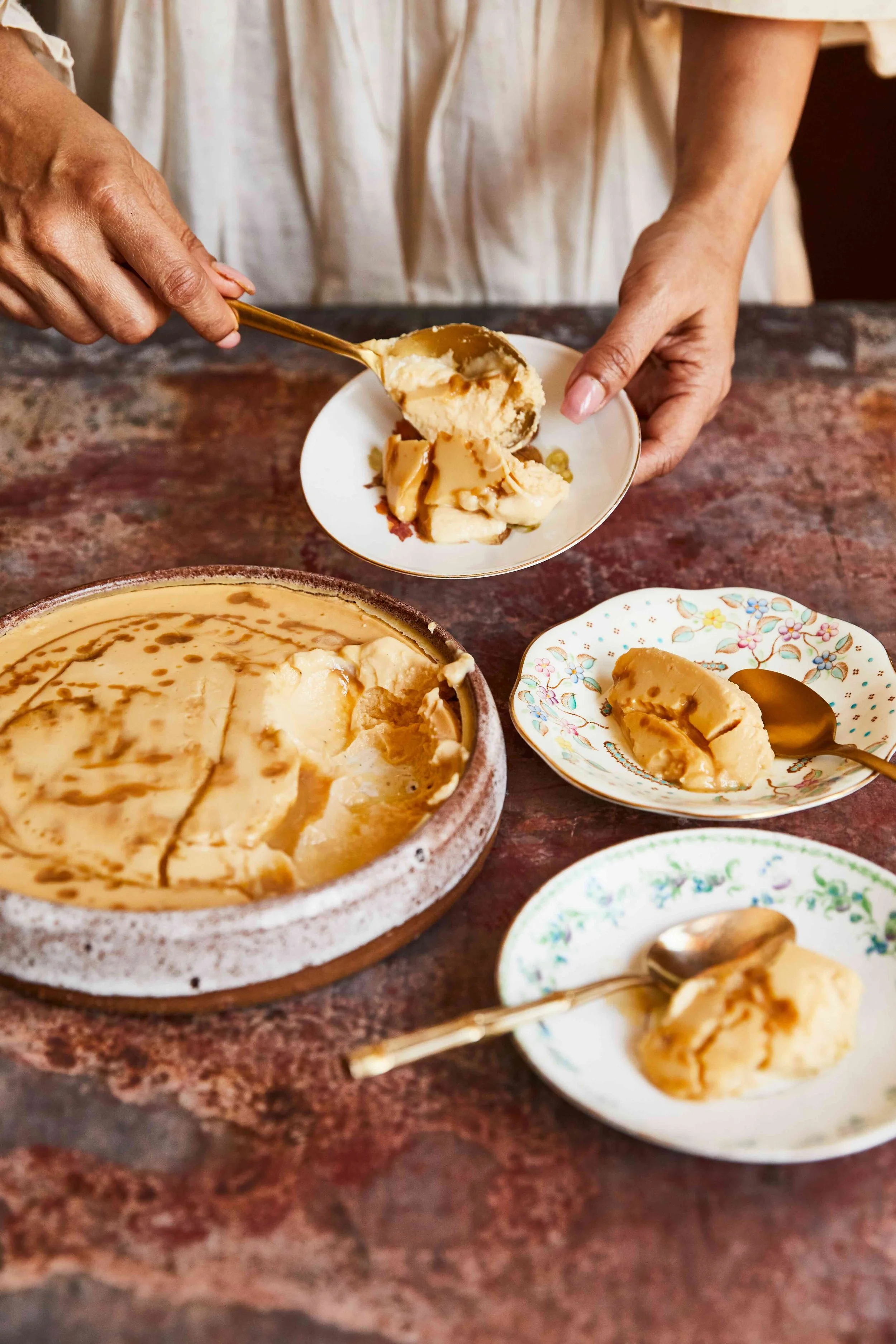
“You will need to begin this recipe a day ahead. Milk holds an essential role in Bengali dessert-making, which is a direct result of Bengal’s longstanding relationship with dairy farming. And if there’s one dessert that embodies this history, it’s mishti doi, a luxurious, silky yoghurt that has put Bengali desserts on the map. Its name translating to ‘sweet yoghurt’, mishti doi also celebrates the region’s rich history of using caramelised sugar and jaggery (palm sugar) to create complex flavours.
Though doi has been consumed across South Asia for thousands of years, the distinct Bengali version – tangy with a toffee-like caramelised sweetness – has evolved into an institution of its own. In the early days, rural households would ferment fresh, locally sourced milk in terracotta or clay pots. The porous nature of these pots allowed the yoghurt to cool slowly, with the cream rising to the top and giving the yoghurt a rich, thick texture.
The dessert became a beloved feature at weddings, festivals and religious ceremonies such as Pohela Boishakh, the Bengali New Year, where it is served as a symbol of sweetness for the coming year. In daily life, it is often eaten at the end of a meal to cleanse the palate.
While mishti doi is enjoyed throughout Bengal, Bogra, a district in the Rajshahi Division of Bangladesh, is especially renowned for its unique preparation of this dessert. What sets Bogra’s mishti doi apart is the use of gura gur – a traditional, unrefined jaggery – rather than refined sugar. Gura gur not only imparts a deep, caramel- like flavour, but it adds a subtle earthy richness that gives the yoghurt a complex, full- bodied taste.
While traditional mishti doi takes time and patience, my recipe has evolved to suit modern kitchens and busy lives. Growing up in the diaspora, I often found myself turning to shortcuts, using store- bought yoghurt and condensed milk to replicate the creamy, caramelised yoghurt of my childhood. Through experimentation, I found a way to adapt the recipe without compromising on the flavour or texture that makes this dessert so special. My modern- day version may take less time to prepare, but it still captures the essence of mishti doi – the creamy richness, the caramel sweetness – with a brûlée- like sugar crust that’s my twist on this age- old favourite.
Serves 6
340ml tinned evaporated milk
395g tinned condensed milk
2 cups (500g) plain yoghurt
grated zest of one orange, plus extra to garnish
a few drops orange blossom essence
2 tbsp caster sugar
Preheat the oven to 160°C. Fill a deep roasting tray halfway with water to create a bain- marie. This gentle water bath will ensure a smooth, creamy texture for your custard.
In the bowl of an electric mixer fitted with the whisk attachment, combine the evaporated milk, condensed milk and yoghurt. Mix on a low speed until fully incorporated, then add the orange zest and orange blossom essence. Increase the speed to medium and whisk for 4–5 minutes, or until slightly aerated. Carefully pour the mixture into a 21cm × 23cm glass or ceramic casserole dish (or divide evenly among six 90ml). Place the dish into the prepared bain- marie and transfer the tray to the preheated oven. Bake for 12–14 minutes, or until the edges are set and the centre still has a slight jiggle.
Remove the dish from the water bath and let cool to room temperature. Transfer to the refrigerator to chill overnight, allowing the flavours to develop and the custard to set completely.
When ready to serve, sprinkle a thin, even layer of caster sugar over the baked yoghurt. use a kitchen torch to caramelise the sugar until it forms a crisp, golden crust. If a torch isn’t available, place under a hot oven grill for a few minutes, watching carefully to prevent burning.
Finish with a fresh sprinkling of orange zest. Serve immediately to enjoy the contrast of the crisp, caramelised top with the silky, fragrant custard beneath.
Note: for a more traditional version, leave out the orange zest and essence, and drizzle a little melted jaggery or caramel over the top before serving.
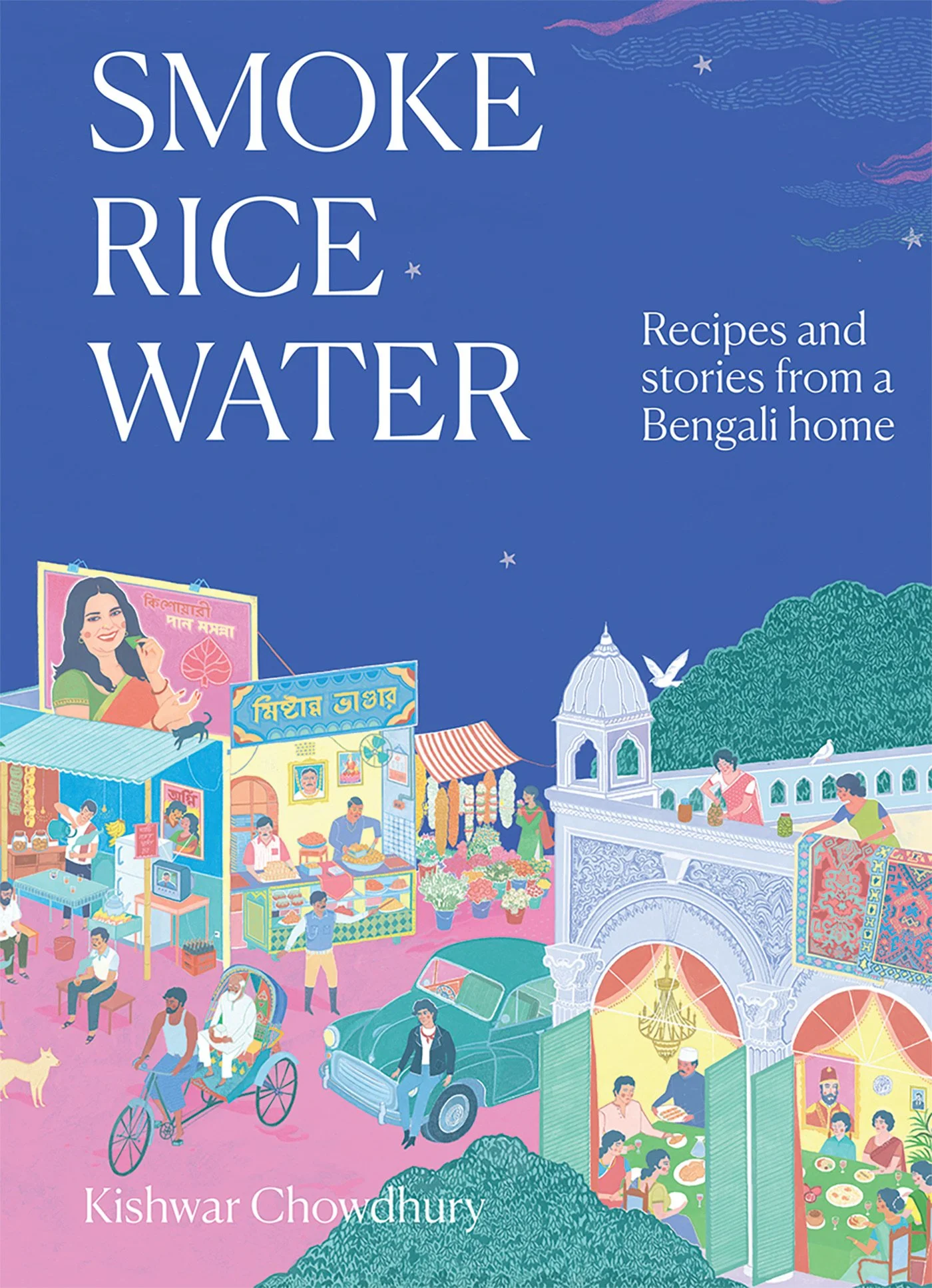
This is an edited extract from Smoke, Rice, Water by Kishwar Chowdhury, published by Hardie Grant Books.
📷 Photography by Armelle Habib, Ata M Adnan, Rana Pandey (Koi Worldwide) and the Chowdhury family archive. Illustrations by DhakaYeah.