Lamb tangri roast - Roast leg of lamb
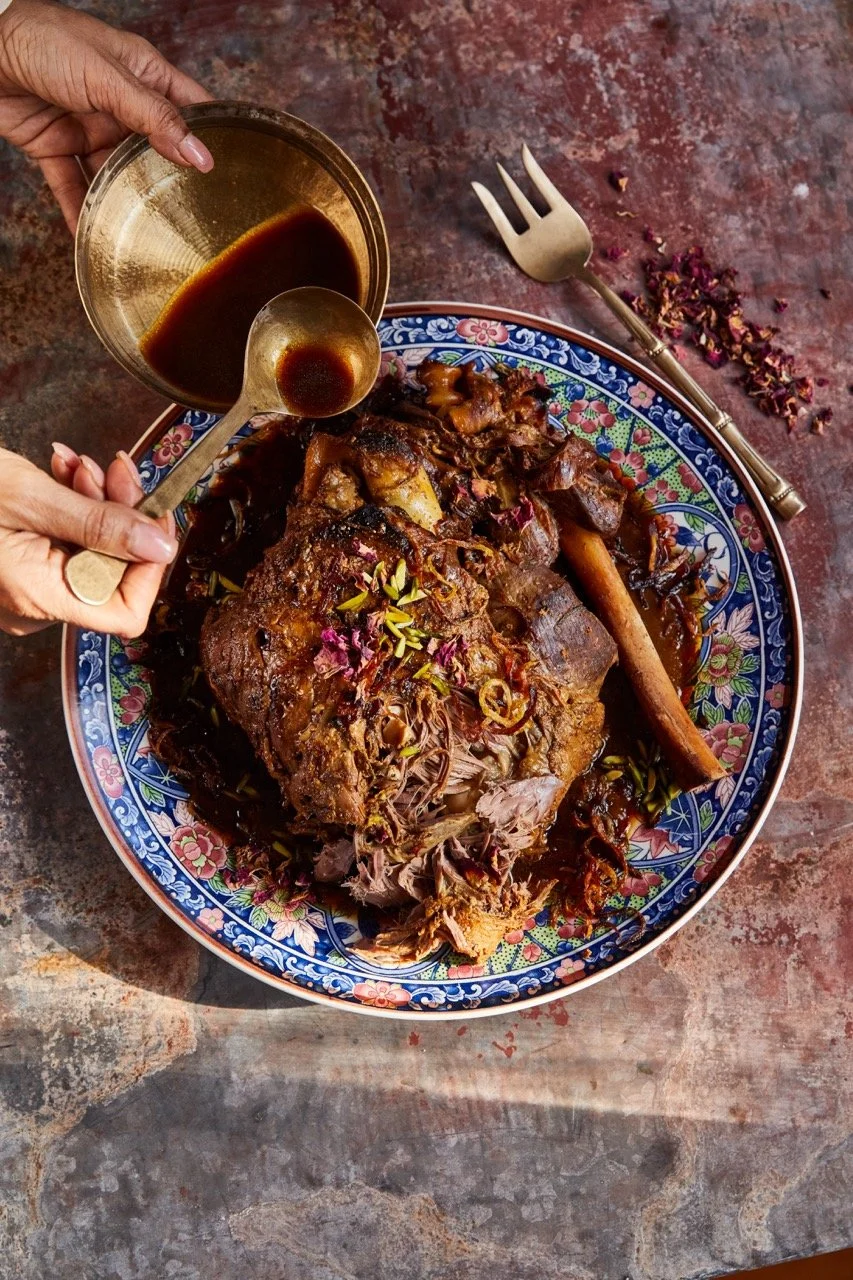
“You will need to begin this recipe at least a day ahead. There’s something undeniably theatrical about placing a whole roast leg of lamb at the centre of the table, its inviting aroma swirling around the room. If there’s one dish that captures both showmanship and substance, it’s roasted lamb tangri (leg). Rooted in the grandeur of court cuisine, this specialty, especially revered in cities like Lucknow, was the epitome of royal indulgence.
Traditionally, whole-roasting a leg of lamb or goat for dishes like raan- e- kebab was a labour of love in Mughal rasois (kitchens). Marinated in a luxurious mix of yoghurt, garlic, ginger and warm spices like cumin, coriander, gorom moshla and cloves, the meat was slow-cooked to tender perfection. Whether roasted over open flames or buried beneath hot coals, the process was as much an art form as it was a testament to the skilful cooking techniques of the time.
My family’s version of roast lamb draws inspiration from this royal dish but also reflects the influence of our surroundings. The finest Australian lamb – a whole leg or a large shoulder with the bone in, perfect for slow roasting, is marinated in a spice mix reminiscent of the original recipe but with a few Mediterranean twists: a touch of honey for sweetness, and fresh rosemary or mint snipped straight from our herb garden.
After years of tampering with my mother’s authentic recipes, I finally realised I could not only replicate recipes but confidently write my own. For lamb tangri roast, I removed the ginger and some of the competing aromatics and spices, added more garlic and rosemary, and heightened the sweetness with pomegranate molasses and honey. The results put me officially in charge of roasting the lamb legs in our home – a huge honour, as you can imagine.
A dish like this is all about gathering loved ones around the table, marvelling at the centrepiece and savouring the tender, spiced meat that melts in your mouth. For my family, this recipe is more than a nod to tradition; it’s a celebration of how food evolves and adapts through generations, carrying pieces of history while embracing the produce of our home and garden.” — Kishwar Chowdhury
Serves 8–10
1 × 2.5kg leg of lamb or bone- in lamb shoulder
3–4 onions, halved
3–4 whole garlic bulbs, halved, plus a few extra cloves
1 cup (250g) Greek-style yoghurt
2 tbsp garlic paste
1 tbsp honey
1 tbsp pomegranate molasses
1 tbp ground cumin
1 tsp chilli powder
2 tsp onion powder
2 tsp garlic powder
2 tsp salt
1 tsp freshly ground black pepper
juice and grated zest of 1 lemon
6 rosemary sprigs or 1 bunch mint leaves
1/4 cup (60 ml/) ghee or olive oil
Trim off any excess fat as needed, then place the lamb into a deep roasting tray lined with the onion and garlic – this not only helps with even cooking but also infuses the juices with a rich, caramelised flavour.
In a mixing bowl, whisk together the yoghurt, garlic paste, honey, pomegranate molasses, ground cumin, chilli powder, onion powder, garlic powder, salt, pepper, lemon juice and lemon zest. This marinade brings a balance of tangy, spicy and aromatic flavours that will deeply penetrate the meat. Generously coat the lamb on all sides, massaging the marinade into every nook and cranny. Use a sharp paring knife to make deep slits in the meat, then stuff them with any garlic cloves you have left and the rosemary sprigs or mint. Cover and let the lamb marinate overnight in the fridge.
Before roasting, bring the lamb to room temperature. Preheat your oven to 180°C.
Cover the lamb tightly with two to three layers of aluminium foil, which will trap the steam and keep it moist. Roast for approximately 45 minutes per kilogram (2 lb 3 oz) for medium–rare, or 60 minutes per kilogram for well- done. (A 2.5kg leg of lamb will take approximately 1 hour 50 minutes for medium–rare.)
In the last 20 minutes of cooking, uncover the lamb and baste it with its pan juices, then drizzle with the ghee or olive oil. This will give it a beautifully roasted crust. Once done, remove the lamb from the oven and let it rest for at least 30 minutes, covering it loosely with foil and a tea towel. This step ensures the juices redistribute, giving you tender, flavourful lamb
Slice and serve warm or cold, paired with Jewelled pulao (page 98) and Pudina chutney (page 315).

This is an edited extract from Smoke, Rice, Water by Kishwar Chowdhury, published by Hardie Grant Books.
📷 Photography by Armelle Habib, Ata M Adnan, Rana Pandey (Koi Worldwide) and the Chowdhury family archive. Illustrations by DhakaYeah.