Doi bora - Lentil fritters in yoghurt
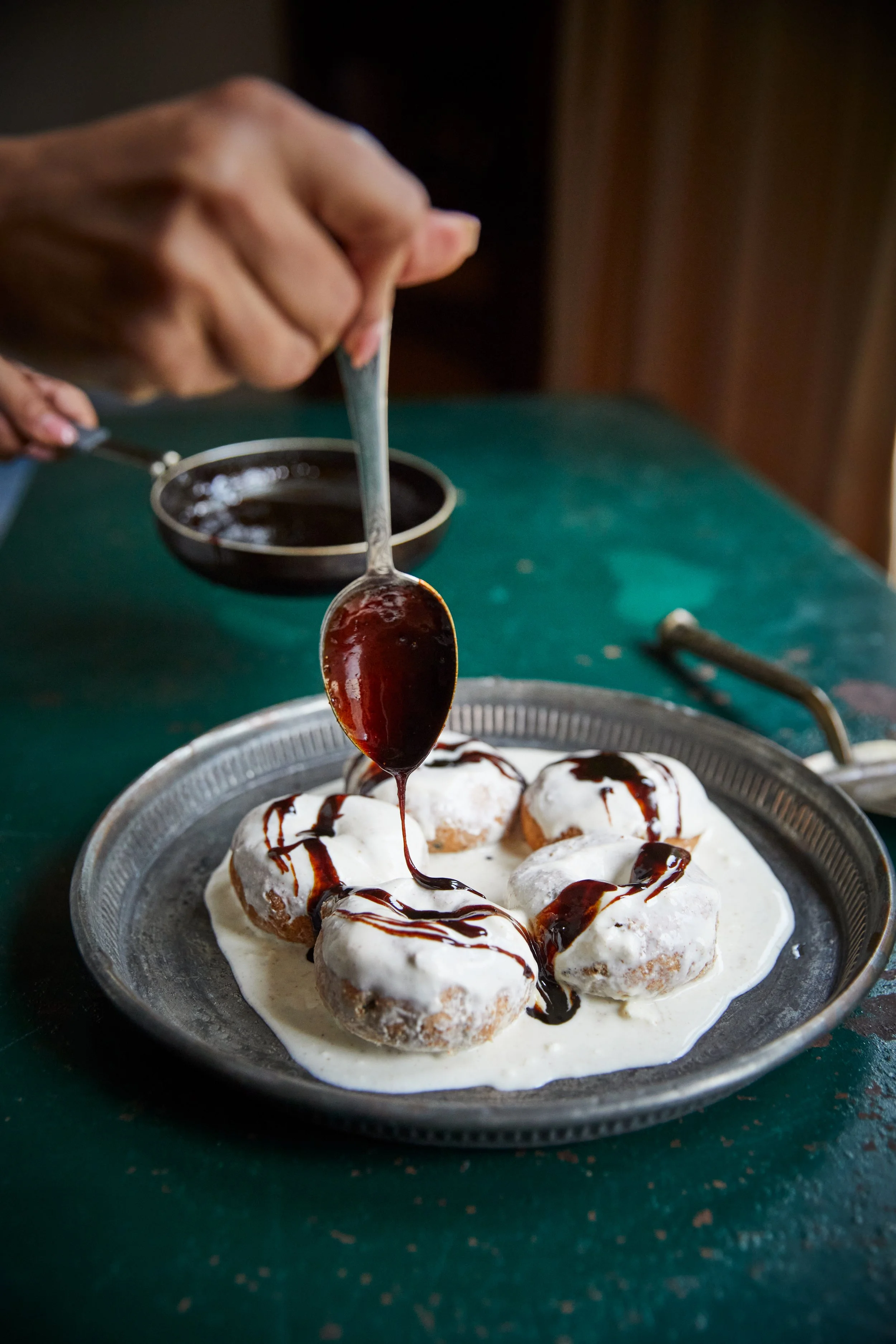
“You will need to begin this recipe a day ahead. Doi bora unites two beloved ingredients: doi (yoghurt) and bora (fritters). It’s a contrasting blend of crispy exterior and soft, yoghurt- infused centre. The fritters, traditionally made from ground and whipped urad daal (also known as black gram), are deep- fried until golden then soaked in a slightly sweetened, spiced yoghurt, which softens the fritters while retaining a delightful contrast of flavours and textures.
This Bengali specialty is enjoyed across many regions of South Asia, with cousins known as dahi vada in India, dahi bhalla in Delhi, perugu vada in Andhra Pradesh and thayir vadai in Tamil Nadu, not to mention variations in Sri Lanka and Bhutan. While the basic concept remains the same – a combination of fried fritters and yoghurt – the local twists and variations make each rendition unique.
For me, doi bora has always been a quintessential part of our Eid celebrations, marking the end of Ramadan. I can still remember the ritual of soaking the urad daal two days before Eid and the excitement (and frustration) of helping my mother blend it the next day.” — Kishwar Chowdhury
Serves 10
2 cups (500g) urad daal
7½ cm piece of fresh ginger, slivered
3 tbsp salt
oil, for deep- frying
2 cups (500g) yoghurt
2 tbsp Tetul’er chutney (see below), or store-bought date and tamarind chutney
½ tsp ground cumin
pinch of Kashmiri chilli powder
fresh coriander leaves, to garnish
finely sliced red chillies, to garnish
Soak the urad daal in cold water the night before you want to make this dish. The next day, drain the soaked urad daal and blend it into a smooth paste, adding just enough water to help it come together. To achieve a light and airy batter, whisk vigorously by hand or with an electric mixer for at least 10 minutes. You’ll notice the batter becoming paler and fluffier, which ensures soft and spongy dumplings. At this stage, add the slivered ginger.
Meanwhile, add 10 cups (2.5 litres) of room-temperature water and the salt to a large bowl. This brine will help soften the dumplings and balance their texture once fried.
Heat the oil in a heavy- based frying pan or wok for deep- frying. Lightly oil a tablespoon and scoop portions of the batter in a smooth, continuous motion into the hot oil. The goal is to ‘roll’ the batter between two spoons until it forms an oval- shaped quenelle. Fry in batches until golden brown and crispy on the outside. As soon as they reach the perfect colour, transfer them straight into the salted water. Allow them to sit until they sink to the bottom, then gently squeeze out excess water and arrange them on a serving plate.
Whisk the yoghurt with half a cup (125 ml) of water and season to taste. Pour this over the dumplings, ensuring they are well coated. Generously drizzle over the tetul’er chutney and finish with a dusting of cumin and Kashmiri chilli powder. Garnish with the fresh coriander and red chilli for a vibrant, aromatic touch. Serve chilled for the best flavour.
Tetul’er chutney - Date and tamarind chutney
Date and tamarind chutney, or tetul’er chutney in Bangla, is a bold and irresistible blend of tangy tamarind and luscious dates that’s like the ‘ketchup’ of Bengal. A true flavour powerhouse, it strikes the perfect balance between sweet, tart and spicy. More than just a sauce, this chutney is a cornerstone of street food culture, playing a starring role in beloved snacks like Phuchka (page 56) and chotpoti, where its rich, tangy depth ties everything together.
Making tetul’er chutney at home is a cherished tradition, especially during the colder months. Tamarind pulp and dates are gently simmered with aromatic spices like cumin, black salt and ginger and often sweetened with jaggery or sugar to create a thick, glossy sauce with layers of complex flavours. In many Bengali households, large batches are made and stored for months, ensuring this vibrant, punchy chutney is always on hand for drizzling over street- style snacks, pairing with fried treats, or even eating by the spoonful. It’s a kitchen essential and a little jar of magic that elevates every bite.
Makes 1 small jar
150g pitted medjool dates
300g tamarind pulp
1/3 cup (80ml) apple cider vinegar
1/3 cup (60g) brown sugar or jaggery (palm sugar)
1 tsp chilli powder
3 tsp Gorom moshla (garam masala)
2 cinnamon sticks
1 tbsp chaat moshla
1–2 tsp salt
Temper
1/4 cup (60ml) mustard or vegetable oil
1 tbsp coriander seeds
6cm piece fresh ginger, julienned
In a bowl, break up the dates, add the tamarind pulp and pour over just enough hot water to cover. Let the dates and tamarind soak for a few hours so they can soften and rehydrate. Once rehydrated, use a small paring knife to split open the dates and remove any seeds or pith.
Transfer the dates and tamarind along with their soaking water into a large, heavy- based pot. Add the apple cider vinegar, brown sugar or jaggery, chilli powder, gorom moshla, cinnamon, chaat moshla and salt. Stir and bring the mixture to a boil. Once it’s bubbling, reduce the heat and let it simmer for about 2 hours. This will allow the dates and tamarind to break down. Afterwards, take the pot off the heat and let it cool slightly. Using an immersion blender or hand blender, blitz the mixture into a thick paste.
To prepare the temper, heat the oil in a small frying pan. once hot, add the coriander seeds and ginger. Fry until the coriander seeds start popping, then pour this hot, aromatic oil and spice mix into the simmered chutney. Stir well, then bring the chutney back to a boil for 5 minutes, until slightly reduced and glossy.
Transfer the chutney into a sterilised glass jar and top with a little extra oil for freshness. Seal the jar tightly and store in the fridge, where the chutney will last for months.

This is an edited extract from Smoke, Rice, Water by Kishwar Chowdhury, published by Hardie Grant Books.
📷 Photography by Armelle Habib, Ata M Adnan, Rana Pandey (Koi Worldwide) and the Chowdhury family archive. Illustrations by DhakaYeah.