Sichuan: Ancient Towns: China Beyond the Tourist Streets. Part 2
By Leanne Kitchen
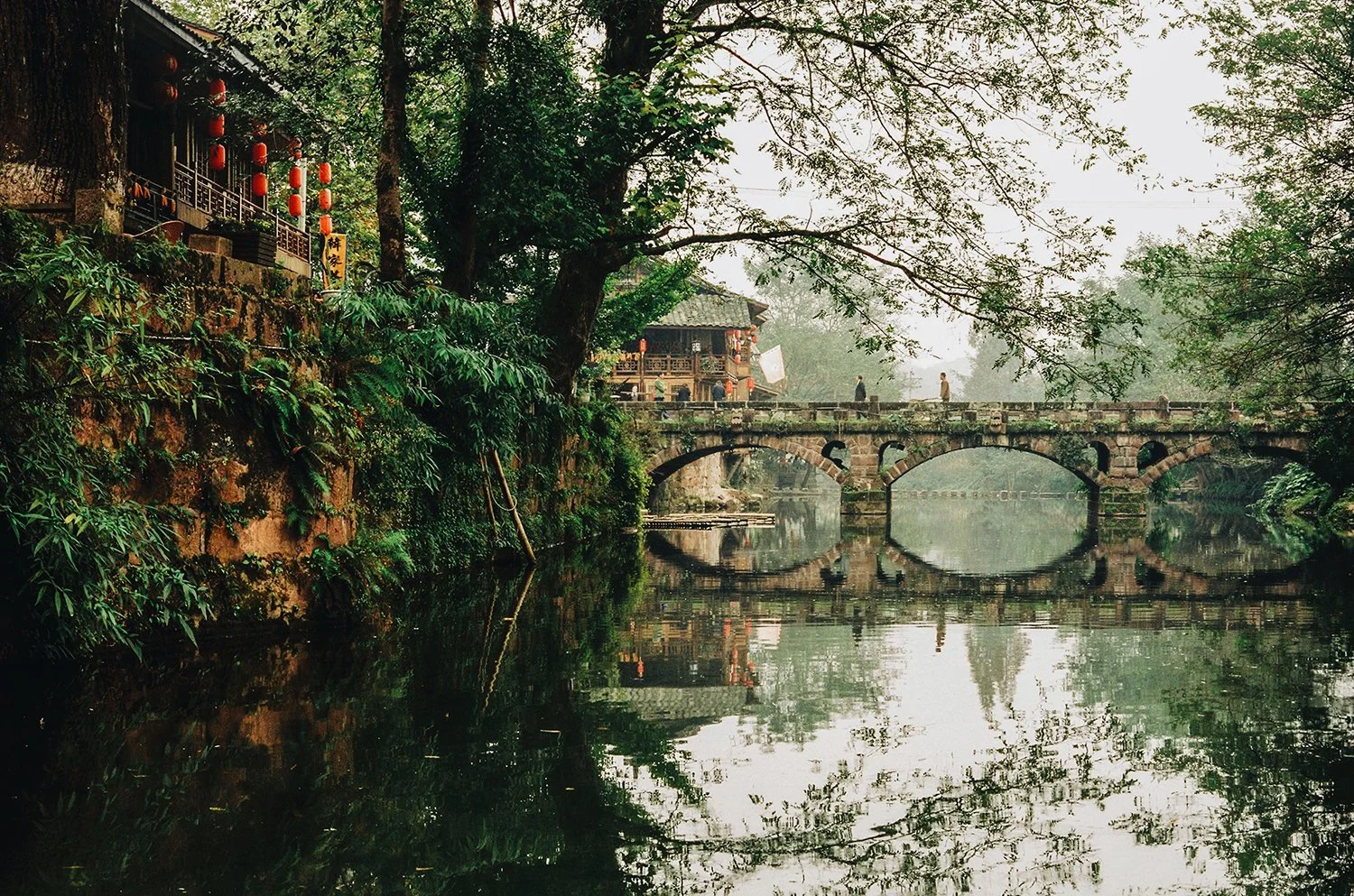
My first visit to Sichuan was in 2006 to research a magazine story. I was instantly drawn to the places beyond the big cities: the ancient towns scattered across the Sichuan basin and mountain valleys, where old wooden houses, riverside teahouses and stone-paved lanes defined the vibe.
I’d see old guys in their blue Mao suits playing cards, kids skipping to school across stepping stones in a river, and farmers going to fields with tilling implements slung over their shoulders. In the early mornings, the tofu seller would walk around, dispensing warm, soft tofu from a big metal bucket, freshly made and totally delicious. Food was a highlight; always simple and absolutely filled with flavour. I still remember eating steamed pumpkin in a small town called Pingle like it was a complete flavour revelation – I’d never tasted pumpkin so intensely pumpkin-y. Food is more immediately sensed in these places: poultry washed in running streams, broad beans and other seasonal vegetables sorted and trimmed in the open air, pork skin singed over an open flame right on the pavement.
Meals are cooked in humble open-front eateries, with steamers billowing, grills smoking and woks flashing over fierce flames. Locals gather on plastic stools, sharing bowls of noodles, plates of family-style dishes and cups of tea as daily life unfolds around them. Food is as visible as it is visceral.
I visited places that have since become famous, including Huanglongxi, Luodai and Suji, and somewhere along the way I bought a locally published book called 36 Sichuan Ancient Towns. Except for the title and place names, it’s all in Chinese, so it required a bit of sleuthing to work out where most of these alluring places were. Visiting them has become a personal mission – I think I’ve knocked off around half.
In those early, pre-translation app days of Sichuan travel, reaching some of these towns required a bilingual guide to smooth the way. I was invariably a huge novelty; not many blue-eyed, blonde foreigners (or any foreigners, come to that) ventured into these spots, and the amount of curiosity could get a little overwhelming. Except for those convenient to Chengdu, you still don’t see many foreigners in these places; the tourism is largely domestic. China has changed dramatically over the last 20 years, with millions of Chinese now enjoying the time and money to travel and explore their own country. Before, they really did not. Booming domestic tourism has brought better infrastructure and made many previous backwaters extremely accessible.
Now, some of the old towns are renovated to the point where the original character is hard to find – historic buildings made spic, span and shiny, old homes turned into shops and cafés, and local businesses dedicated to souvenirs and snacks for visitors.
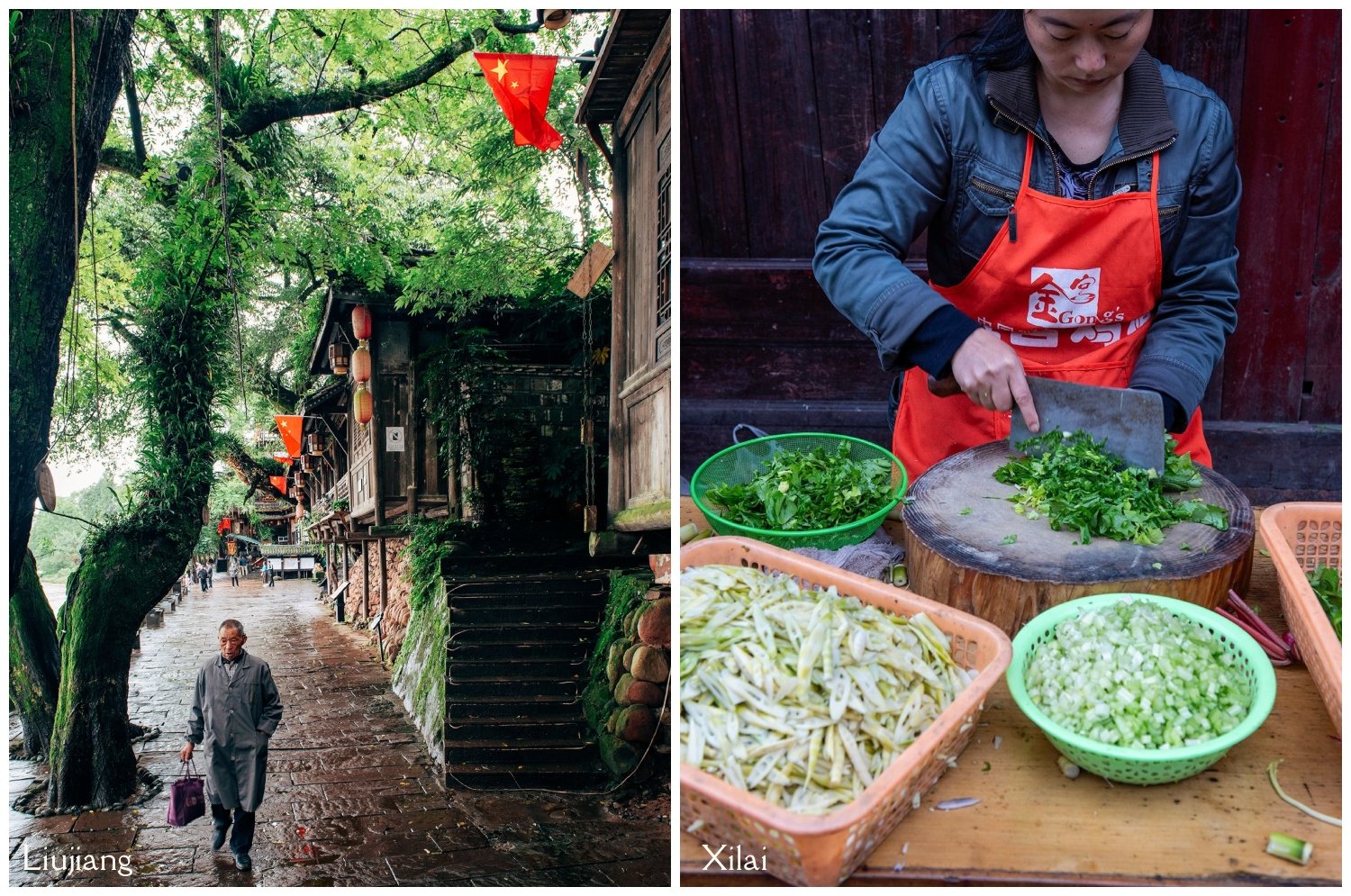
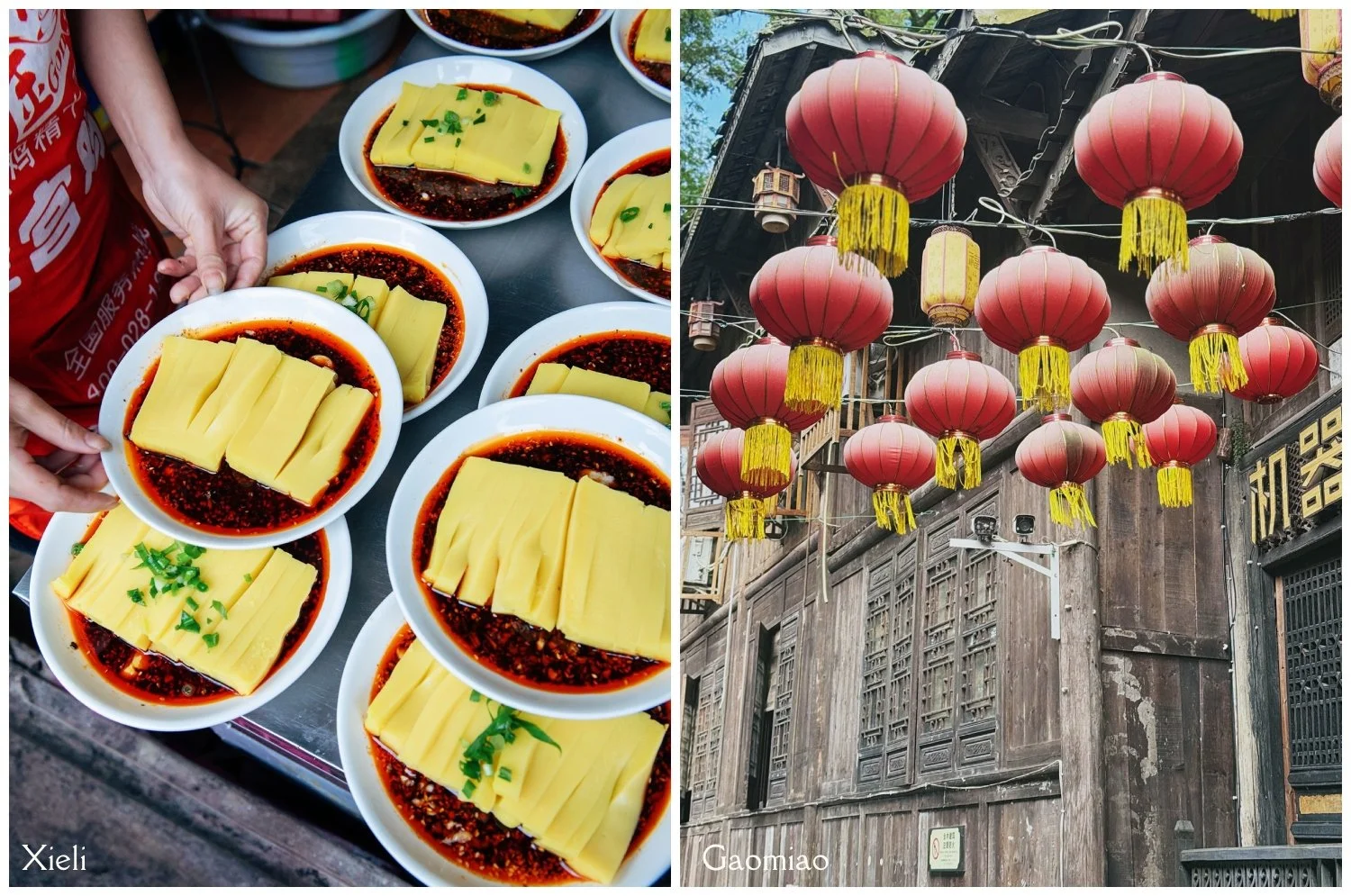
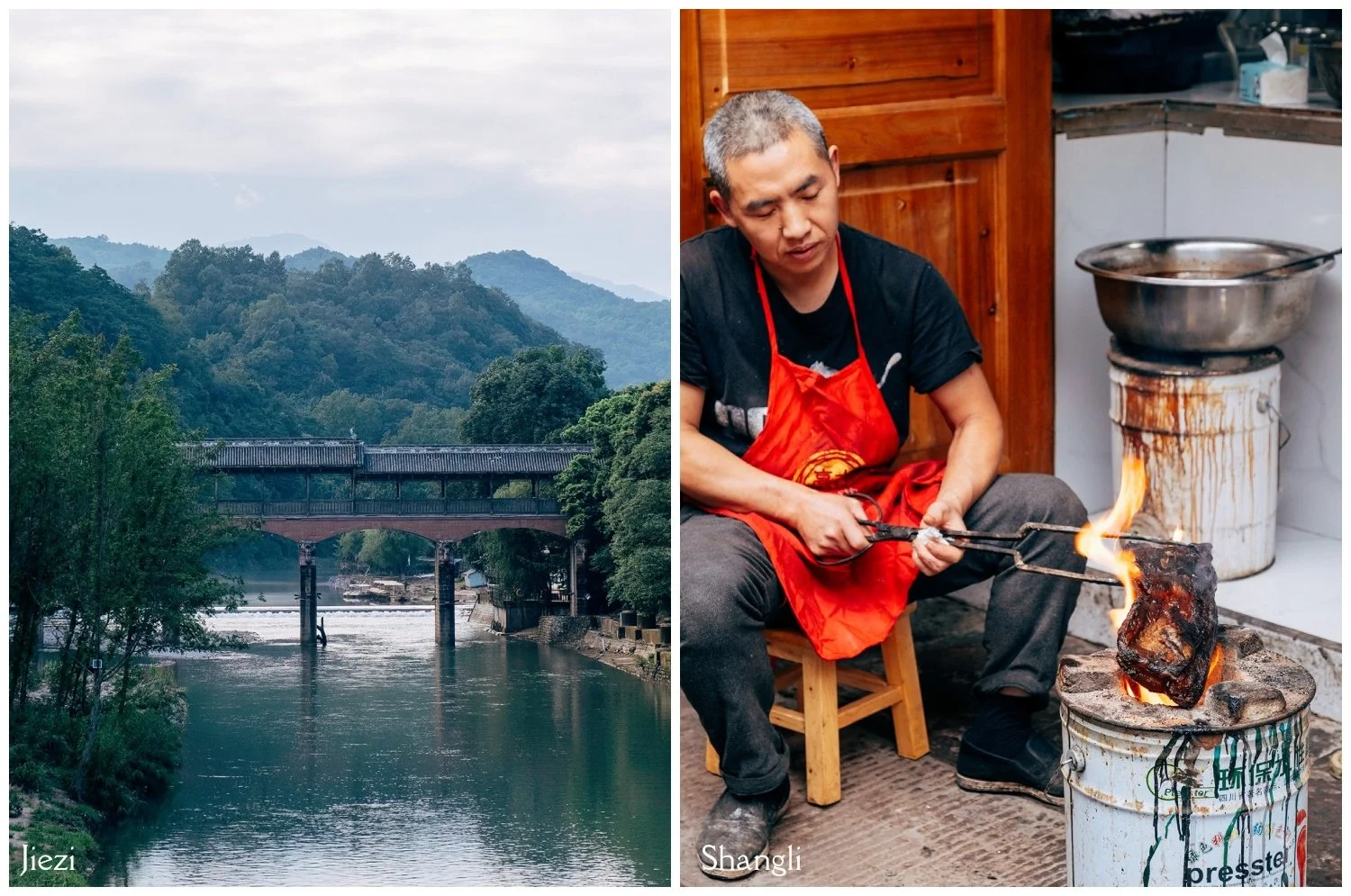
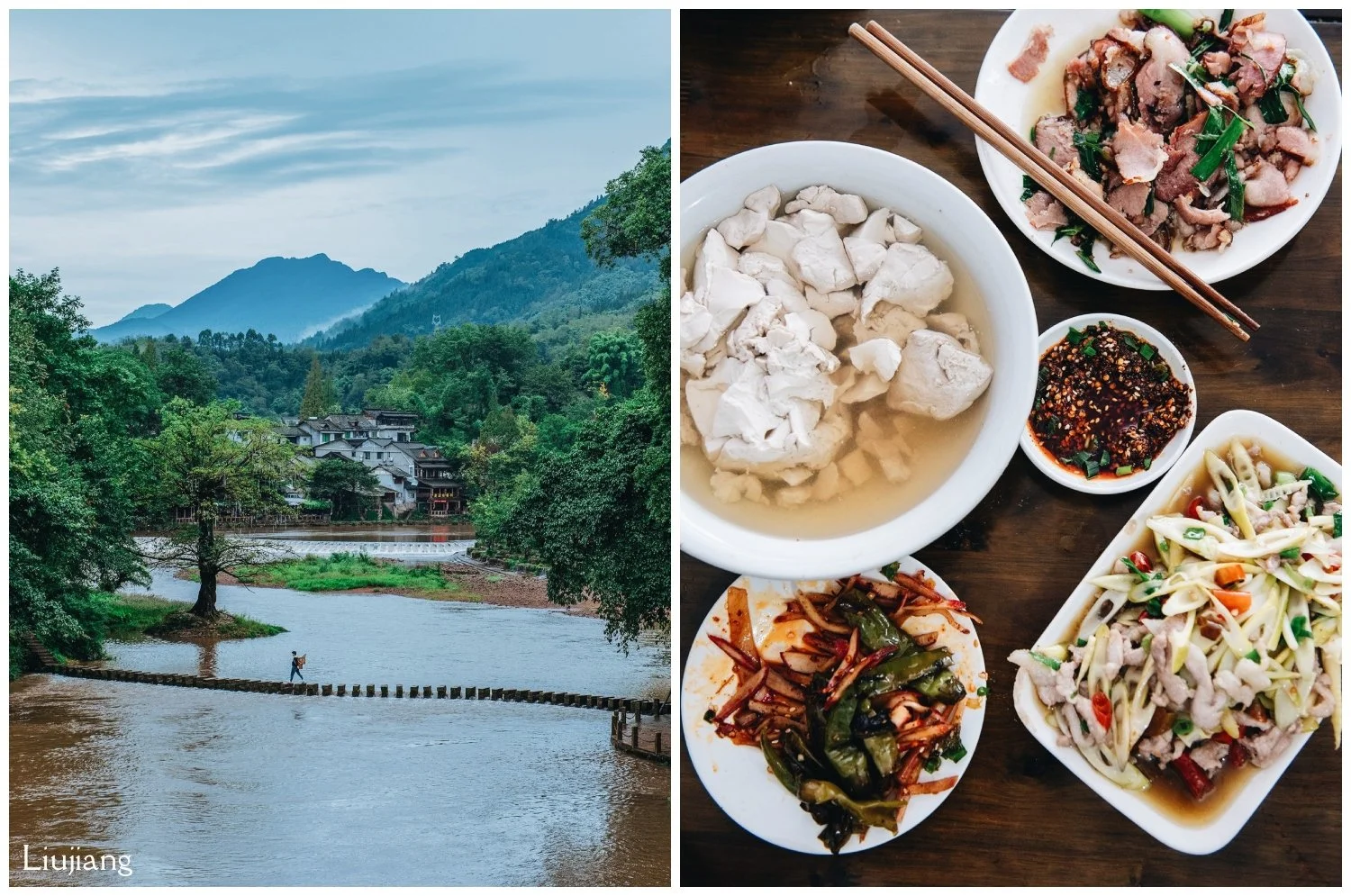
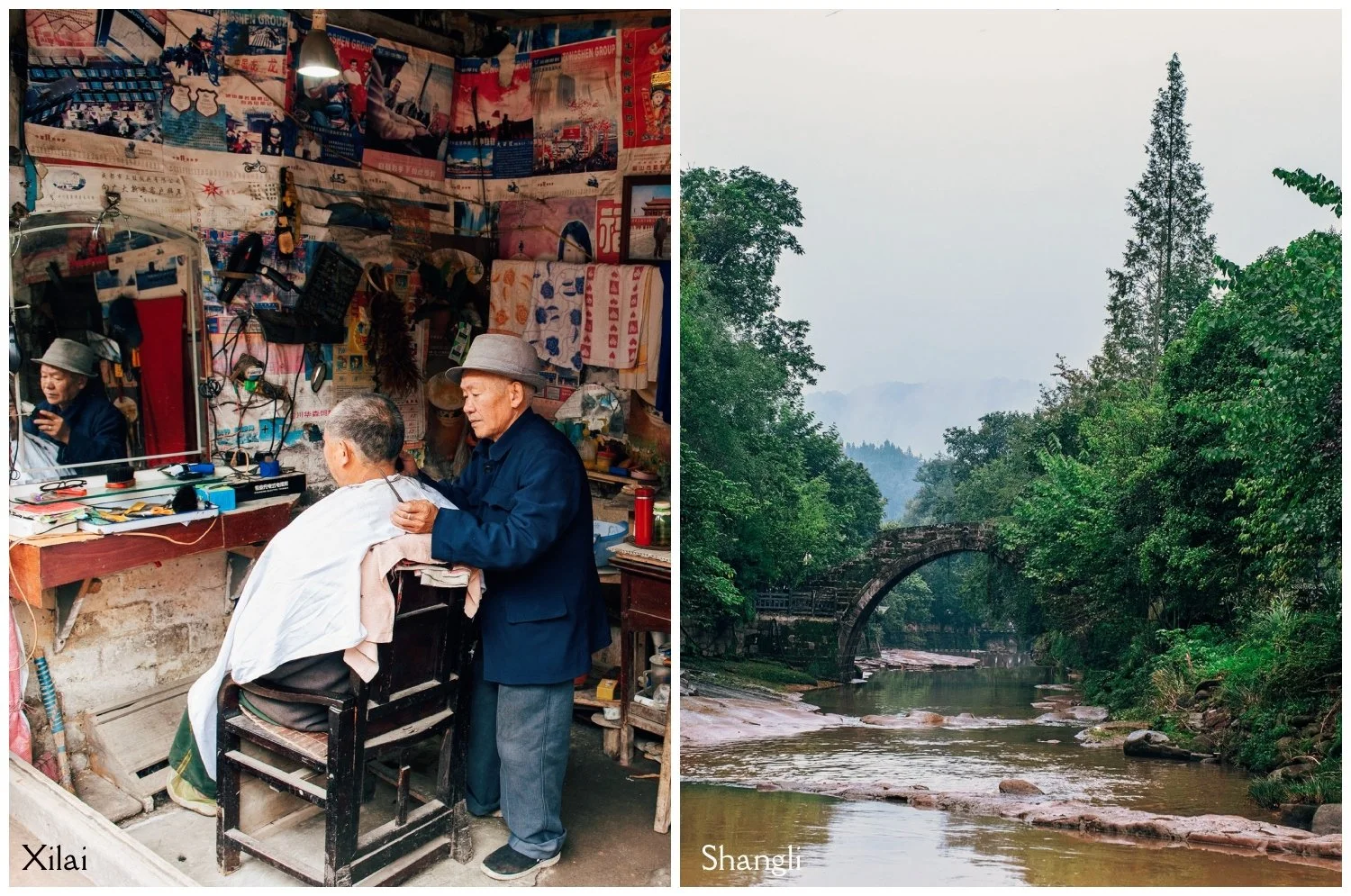
You really have to scratch around to find where the old rhythms remain. In Xilai, a quiet riverside town on the Linxi River southwest of Chengdu, that might be as simple as sitting down in an unprepossessing local canteen for excellent homemade tofu with fiery Sichuan chilli sauce and rice, surrounded by the everyday movement of a town that still feels lived in rather than a stage-set. Further to the southwest, Shangli offers another kind of discovery. Hyper-local ‘da da’ noodles are still made by hand, stretched and pulled before being served with big jiggly squares of braised pork belly. In season, wild pheasant from the surrounding hills appears on local menus, and there’s yǎyú too, the famous snow carp that’s only found in brisk, alpine rivers around Ya’an.
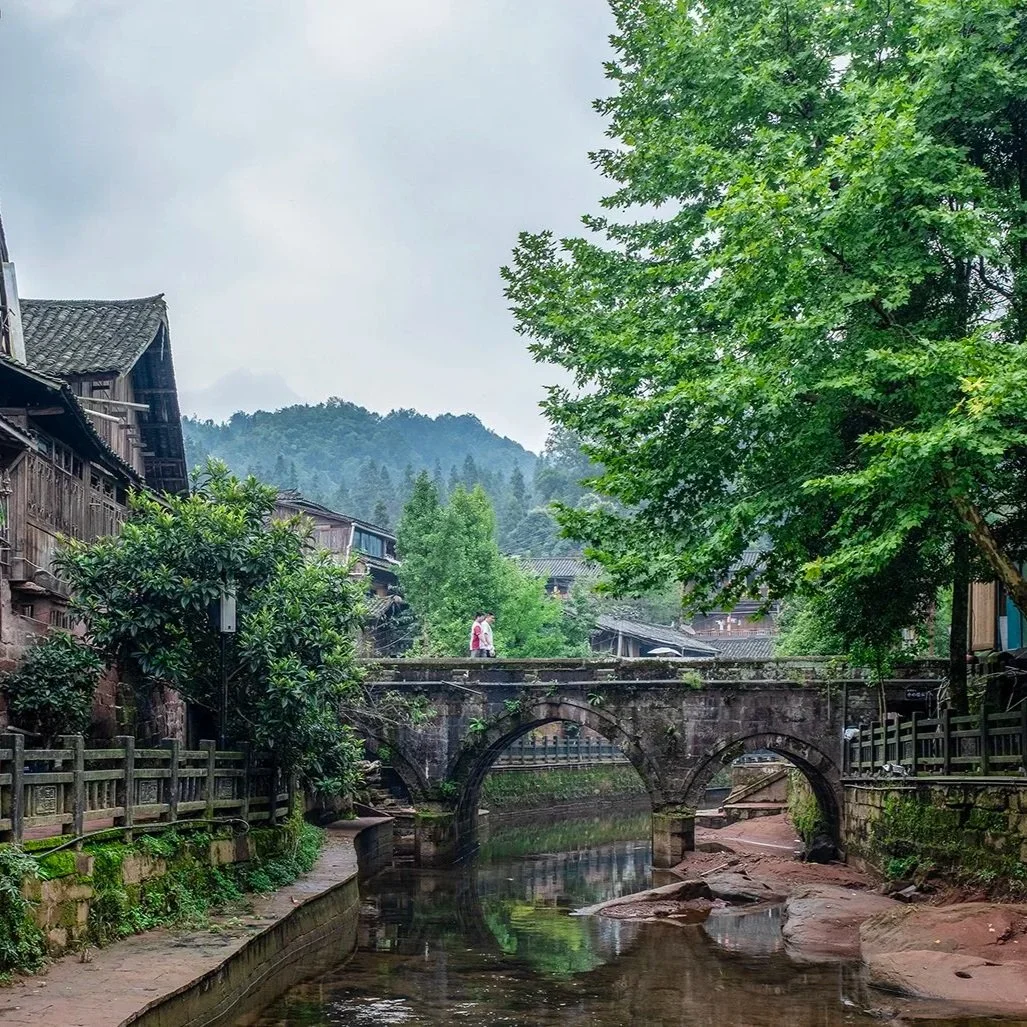
Shangli, despite being truly on the map, remains undeniably beautiful: it’s in a little basin with rivers, bridges and fields and surrounded by misty green hills. The riverbanks are often crammed with art students, hunched over easels, concentrating hard on capturing the bucolic charm. Way more polished than it used to be, the main streets now cater largely to day trippers. But venture beyond the obvious paths (or, stay overnight to experience the quieter hours) and the older layers emerge – peaceful lanes, weathered stonework and inscriptions carved during the Red Army’s passage through the region during the Long March in 1935.
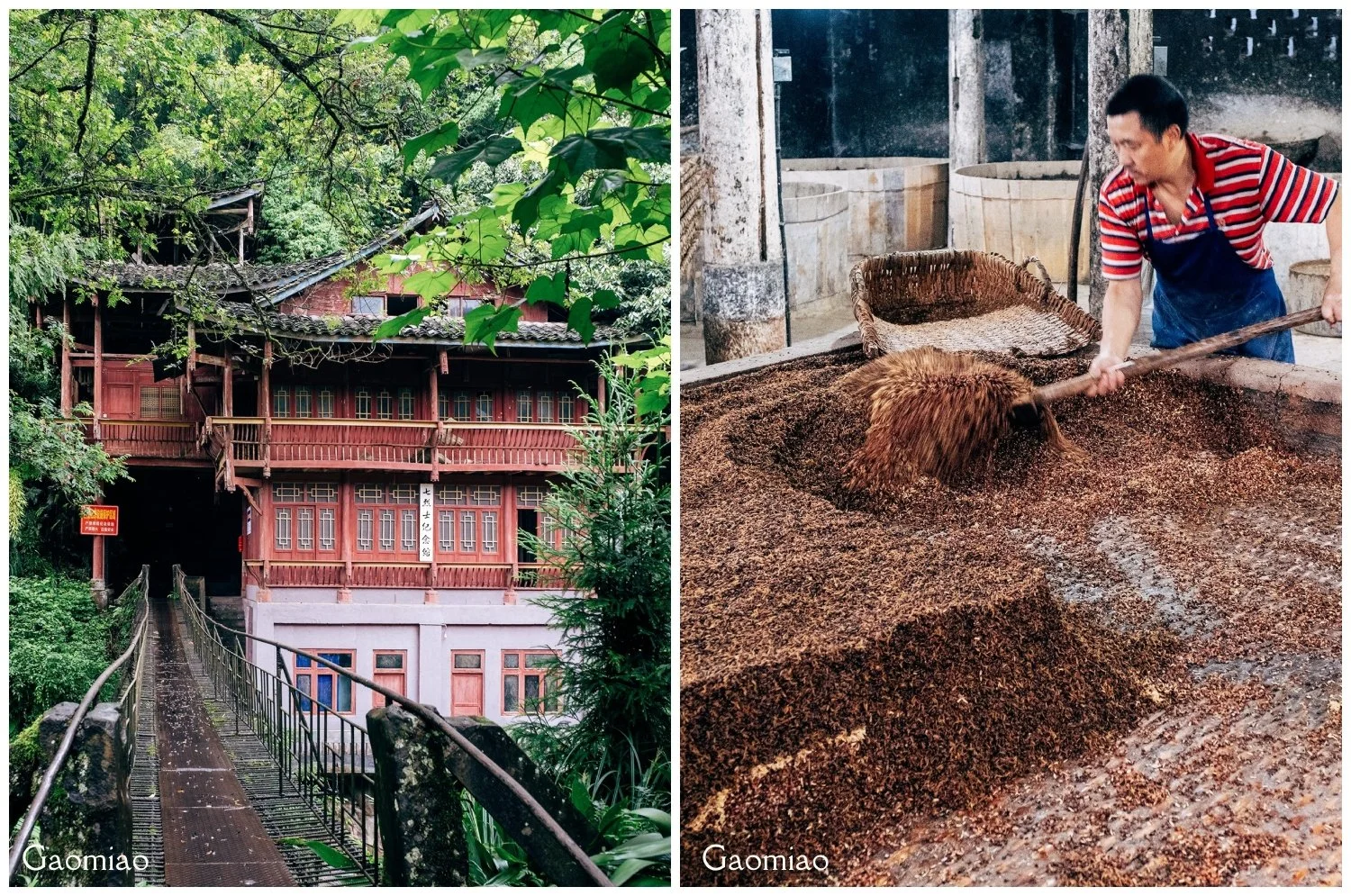
A few places remain under the radar, but you really have to hunt for them – Gaomiao is one. Tucked into the forested valleys of Hongya County, between Mount Emei and Mount Wawu, it still feels refreshingly removed from the tourist trail. It’s home to Laobuzi, a traditional báijiǔ distillery where production continues using old methods and wooden equipment. The owner is particularly welcoming, sharing generous tastings and details of a craft passed through generations. The last time I visited, he sent me off with so many samples I needed a new suitcase to hold them all.
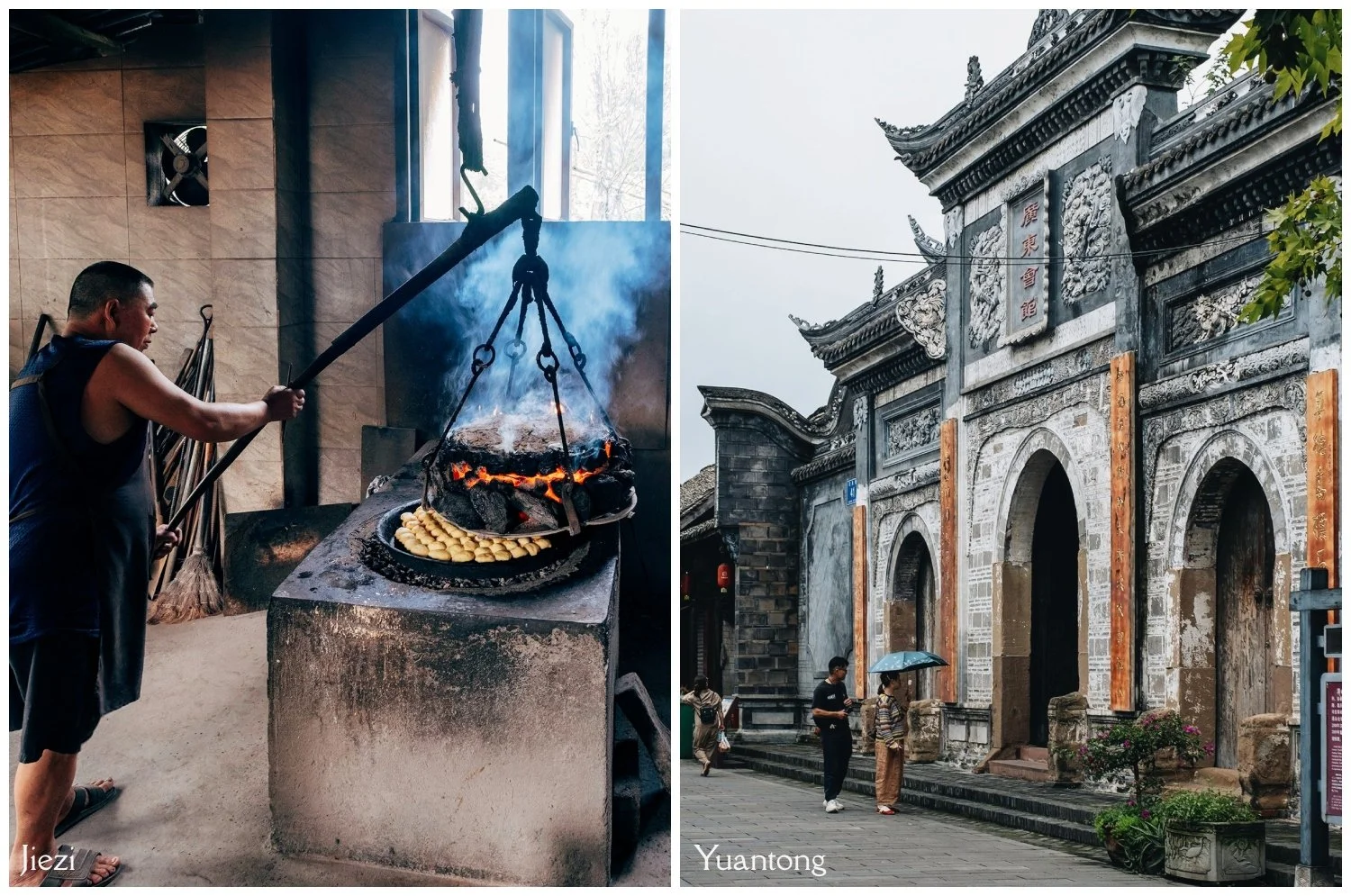
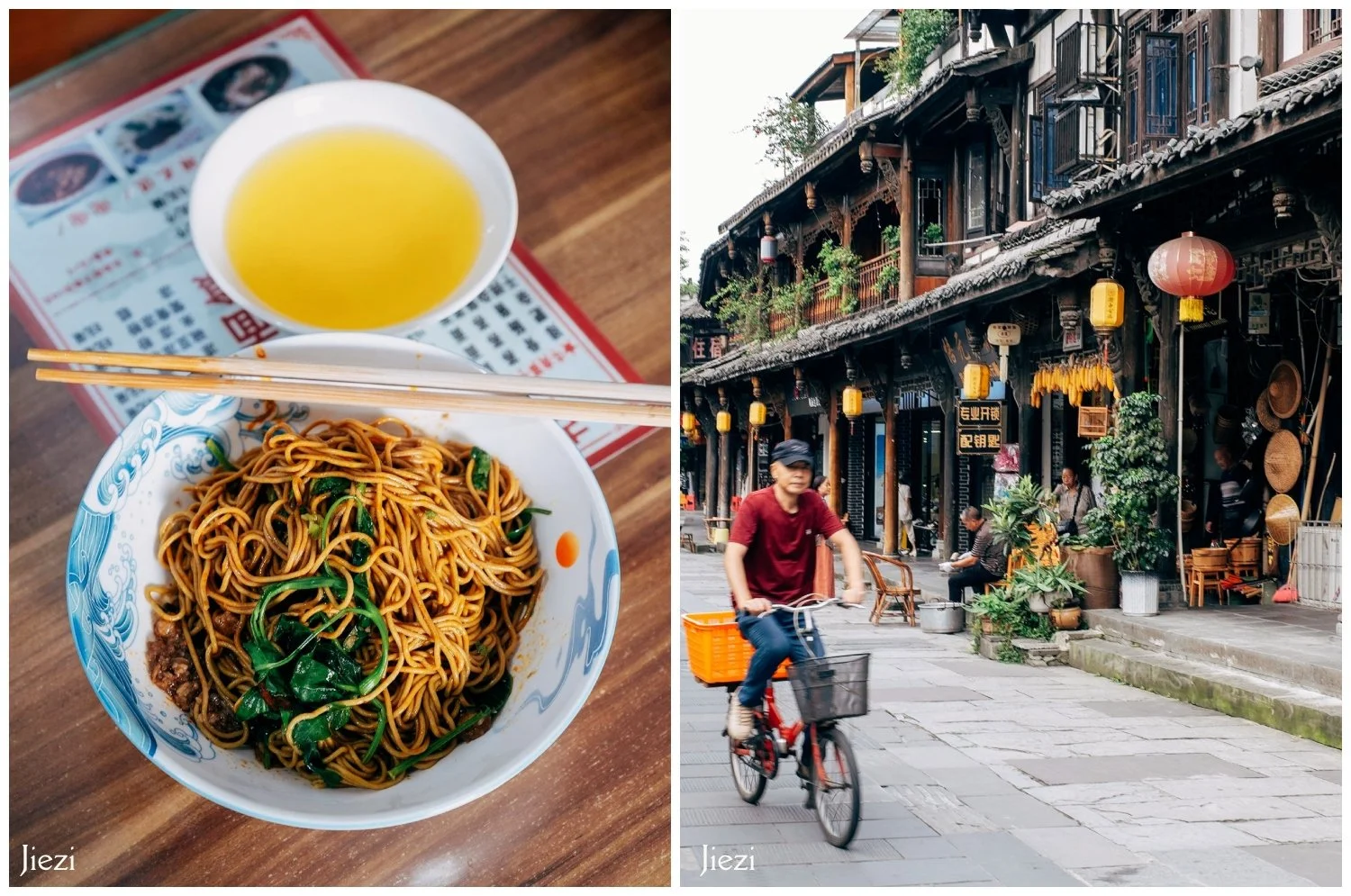
Back near Chengdu at the foot of the mountains near Qingchengshan, Jiezi is gorgeous, but its proximity to the city means it fills fast. I like to stay long enough for a bowl of excellent buckwheat noodles, extruded fresh to order. They’re not only delicious, but a reminder that Sichuan food is not all about spicy flavours and famous dishes. I also like dropping into Zhang Shichao’s little cake shop, where he bakes using a traditional charcoal-fired contraption made by his great-uncle, relying on experience and feel rather than a modern thermostat. The sponge-like cakes are deliciously light, eggy and ever so slightly smoky.
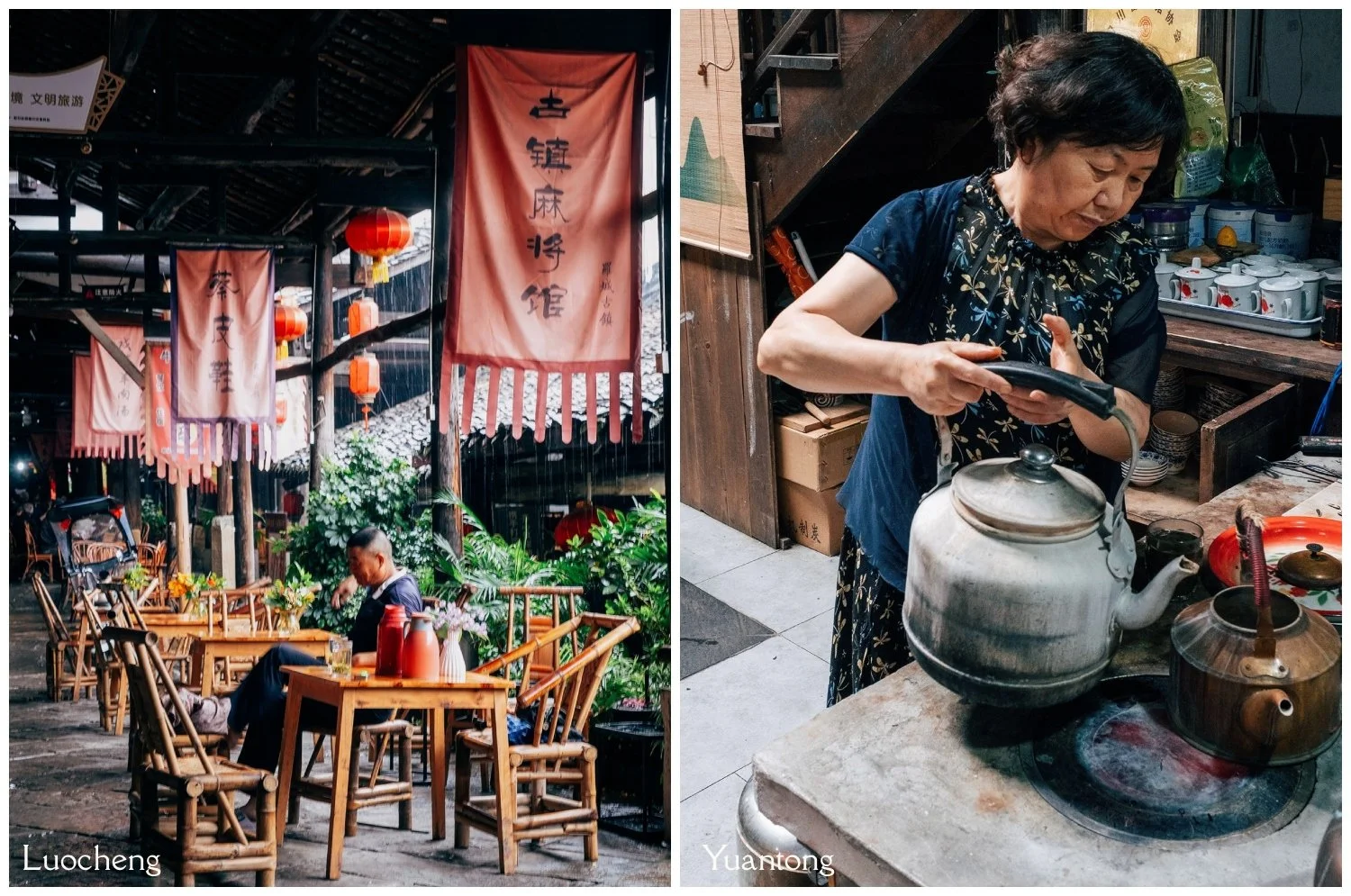
Nearby, Yuantong is a touch quieter, and I prefer it for the cured meat shops, the famous Sichuan pepper roast duck, and the way it offers a glimpse of a slower rhythm of riverside life. Plus there’s the fabulous 100-year-old Xiajia Teahouse, a two-storey wooden structure where locals still gather for tea. Water is drawn directly from a well set into the floor, and the old metal teapots and ‘tiger stove’ remain in use. The stove is a large masonry boiler traditionally found in Sichuan teahouses, designed to keep water constantly hot and serve the steady stream of customers who might sit for hours over a gàiwǎn (covered bowl) of tea. Sitting there watching the world drift by is to step into another pace of life.
Some towns are memorable because of their surroundings as much as their architecture – Liujiang, for example. With stilted wooden houses slung along the Huaxi River and old banyan trees lending plenty of character, daily life blurs here into the stunning landscape that surrounds it. Hills offer the opportunity to walk deep into nature and forget you’re in one of the most populous countries in the world; it’s incredibly peaceful.
Eating cumin-dusted barbecued rabbit beside the river, with mist rising off the water and locals going about their day, captures how food, landscape and everyday life are still closely intertwined, if you slow down and look.
And then there is Luocheng, with its unique boat-shaped old street and history as a trading settlement. Here, the influence of the Hui Muslim community remains part of the town’s identity, particularly in its food traditions: famous dried beef and other distinctive halal dishes that reflect the layers of people and cultures that have passed through.
These places remind me that while China has changed at breathtaking speed, continuity still exists. It just reveals itself more stubbornly now, to those willing to stay beyond the day-trippers and experience the quieter hours.
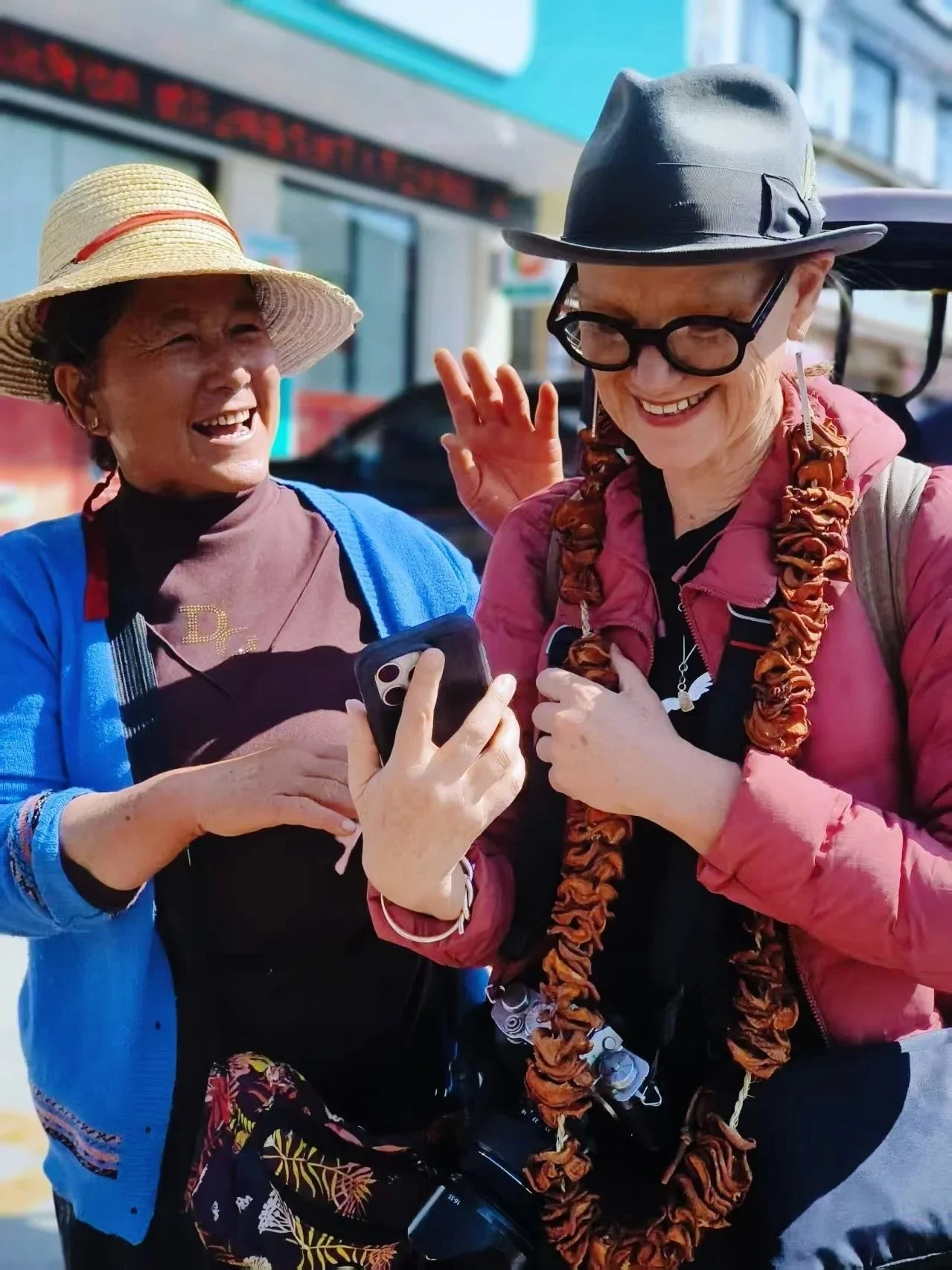
Leanne Kitchen has spent more than three decades working with food; as a chef, food writer and former Food Editor of Australian Gourmet Traveller. She is the founder of Elsewhere & Beyond, where she creates small-group food journeys for curious travellers.