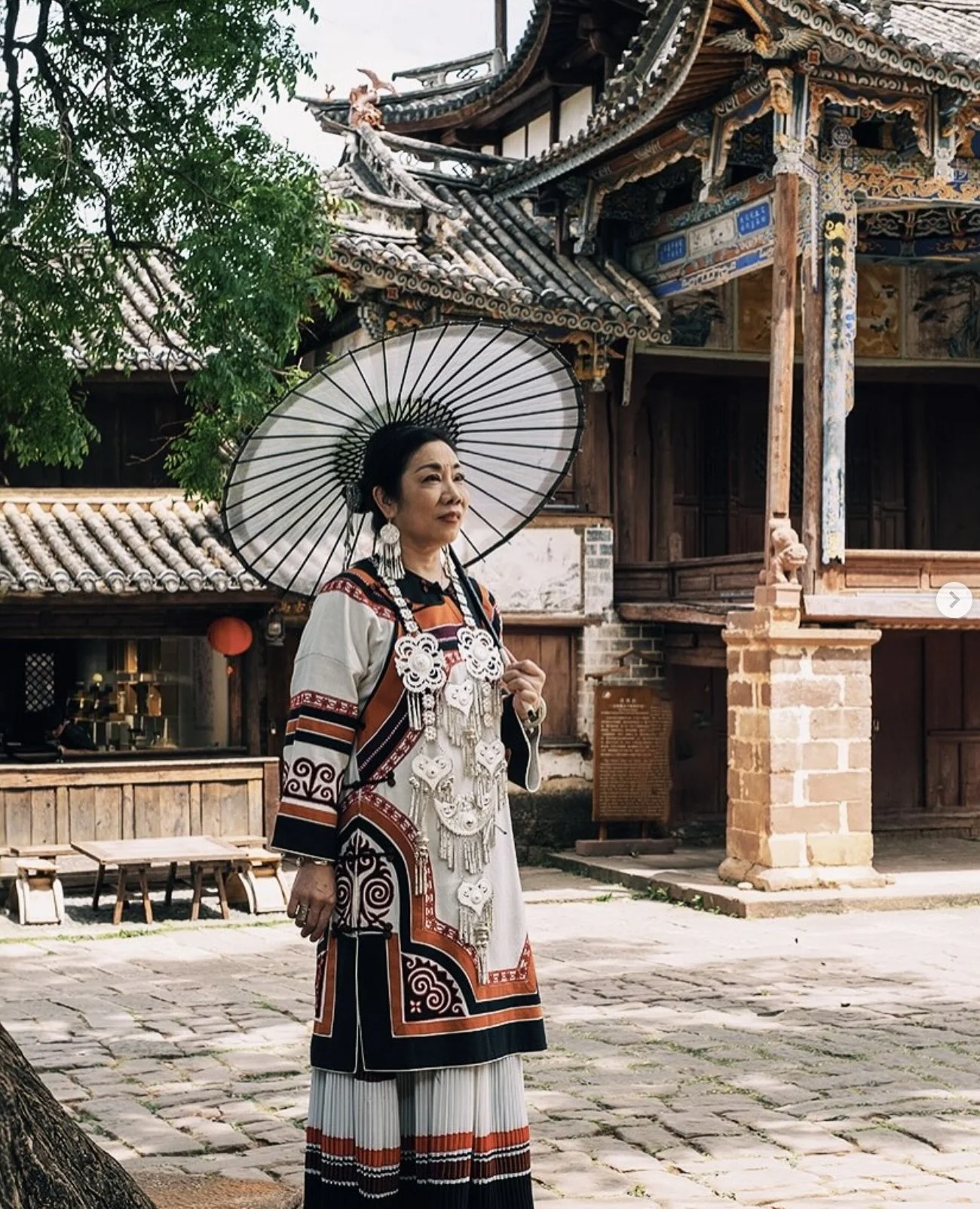
Sichuan: The China I Keep Returning To. Part 1
By Leanne Kitchen
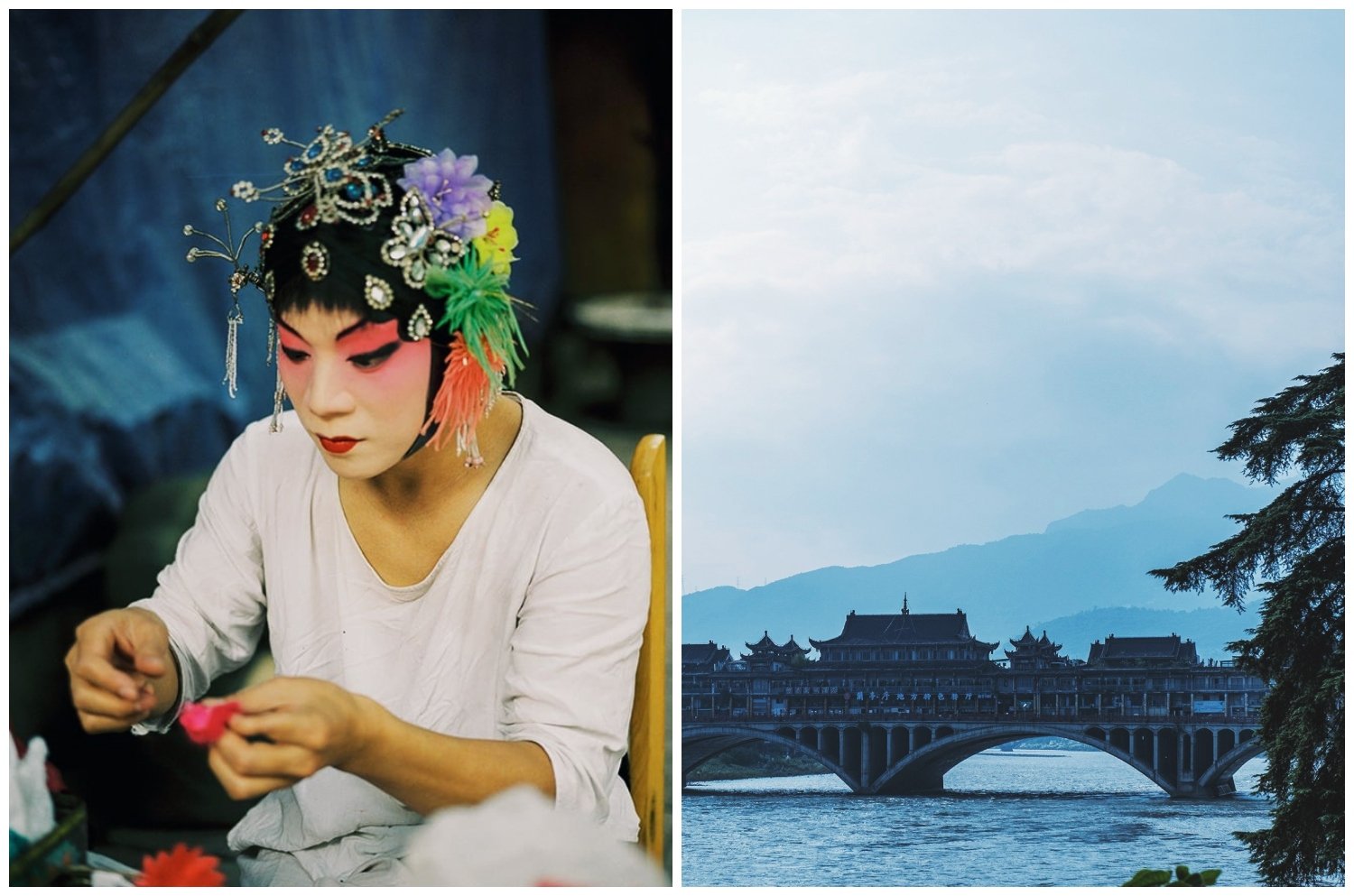
I first travelled to Sichuan in 2006, and my immediate reaction when I stepped out into Chengdu was a slightly bewildered: “Two thousand or so years of history… where is it?” On the surface, the concrete sprawl had seemingly swallowed the past. But it didn’t take long to realise that the history wasn’t in preserved monuments – it’s most alive in the neighbourhoods, in the many teahouses, and bubbling over on backstreet stoves.
Sichuan remains one of the regions of China I’m fondest of, and its capital Chengdu is maybe my favourite Chinese city. The attraction is pretty obvious – Sichuan contains many of the images people associate with China. Namely layered, mist-wrapped mountains, plush bamboo forests, giant pandas, ancient riverside towns, tea houses beneath leafy trees, and colourful regional opera where faces change in the blink of an eye.
But after twenty years, it’s not the postcard version of Sichuan that keeps drawing me back. Well, not entirely. It’s the layers beneath: the extraordinary regional diversity, the food traditions woven into everyday life, the landscapes that shift dramatically from valley to mountain, and the fact that every town seems to have its own speciality that locals will happily argue is the best.
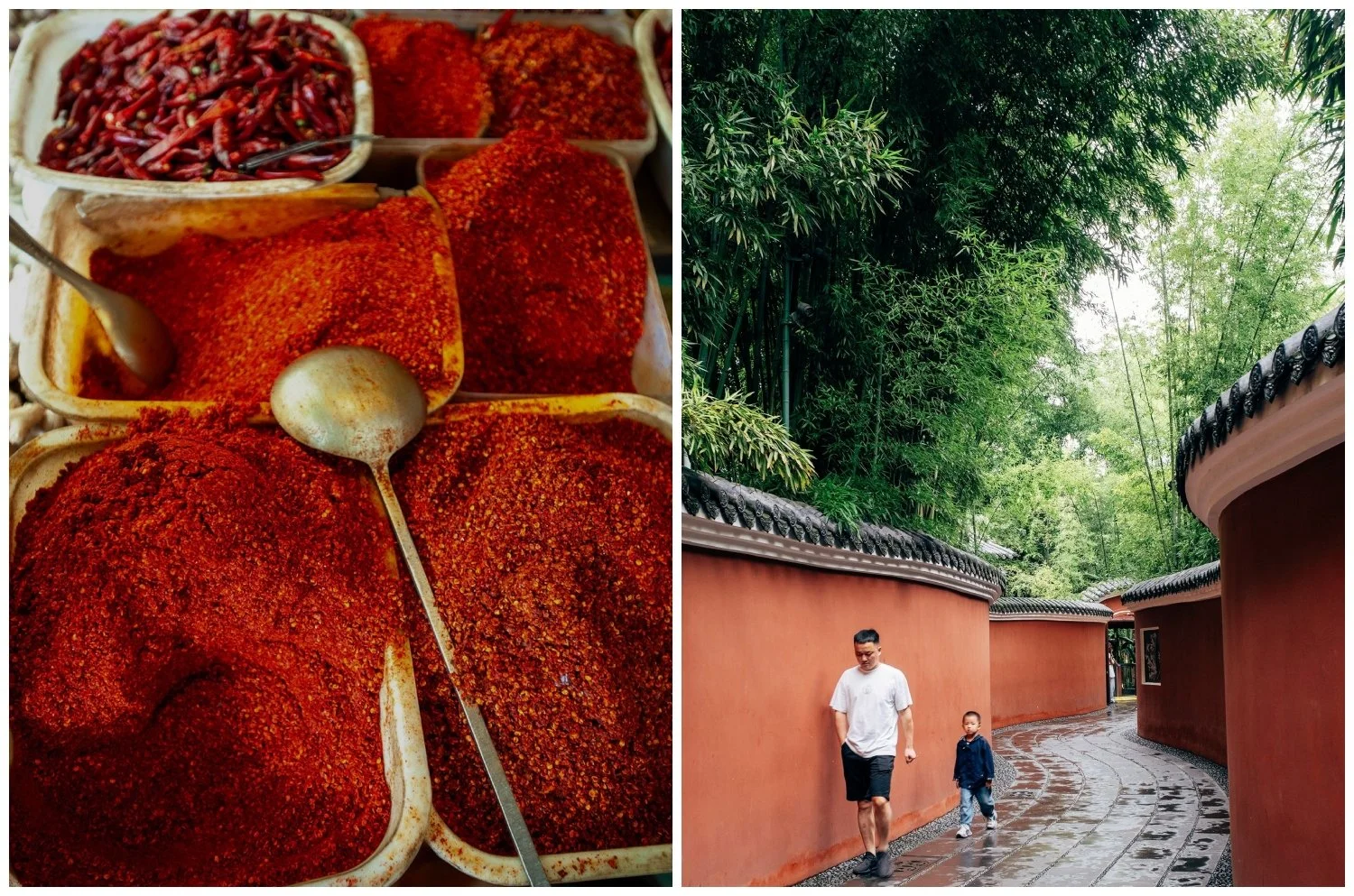
Ask most people what they know about Sichuan cuisine and the answer will usually be “hotpot” and “spicy food”. They’re not wrong, exactly, but this only tells a part of the story.
The defining flavour of Sichuan cuisine is málà – that beloved combination of chilli heat and the numbing kick of Sichuan peppercorn. You smell it in the air in Sichuan towns and cities, and the locals are, it’s fair to say, addicted. But málà is not simply about fiery fare – it’s a carefully balanced interplay of heat, fragrance, acidity, sweetness, fermentation and texture, because Sichuan food is not loud for the sake of it. It is precise and balanced. Traditional culinary theory dictates that Sichuan food is built around twenty-three distinct flavour profiles, and pure chilli heat is just one of them.
There are even dishes that are resolutely UN spicy, such as the local interpretation of lion’s head meatballs (shīzitóu). Far from the rich, soy-braised versions found in Jiangsu, these are delicate, tender pork balls sitting in a vivid green sauce made from finely chopped sweet potato leaves. Silky and deeply savoury, with the fresh, grassy flavour of mountain vegetables, it’s an unspicy dish that celebrates clean, fresh, pure flavour.
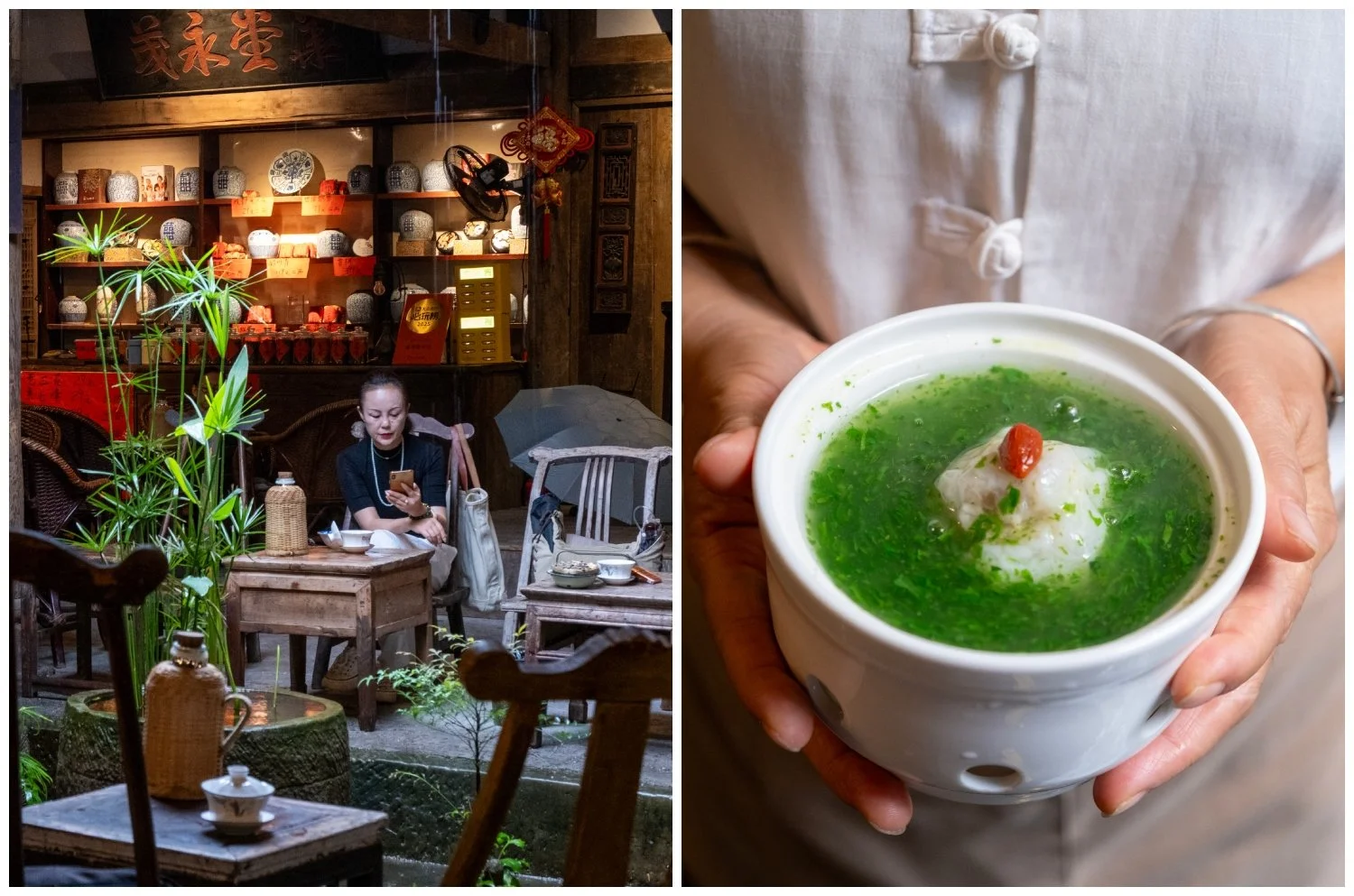
Chengdu, the provincial capital, has a reputation for being relaxed, and this is not just a travel cliché. The city’s social life has long revolved around open-air teahouses, where people spend hours drinking tea out of gàiwǎn (elegant lidded bowls that sit on a saucer), slapping mahjong tiles onto bamboo tables and catching up with friends. Locals have a specific word for this attitude: bāshì. It’s a dialect term that essentially means an absolute state of comfort and ease – a refusal to get sucked into the corporate rat race that defines mega-cities like Shanghai or Shenzhen. There is a famous old Chinese proverb that warns, “The young shouldn’t enter Sichuan, and the old shouldn’t leave,” because the lifestyle here is so seductive it’ll ruin your work ethic entirely.
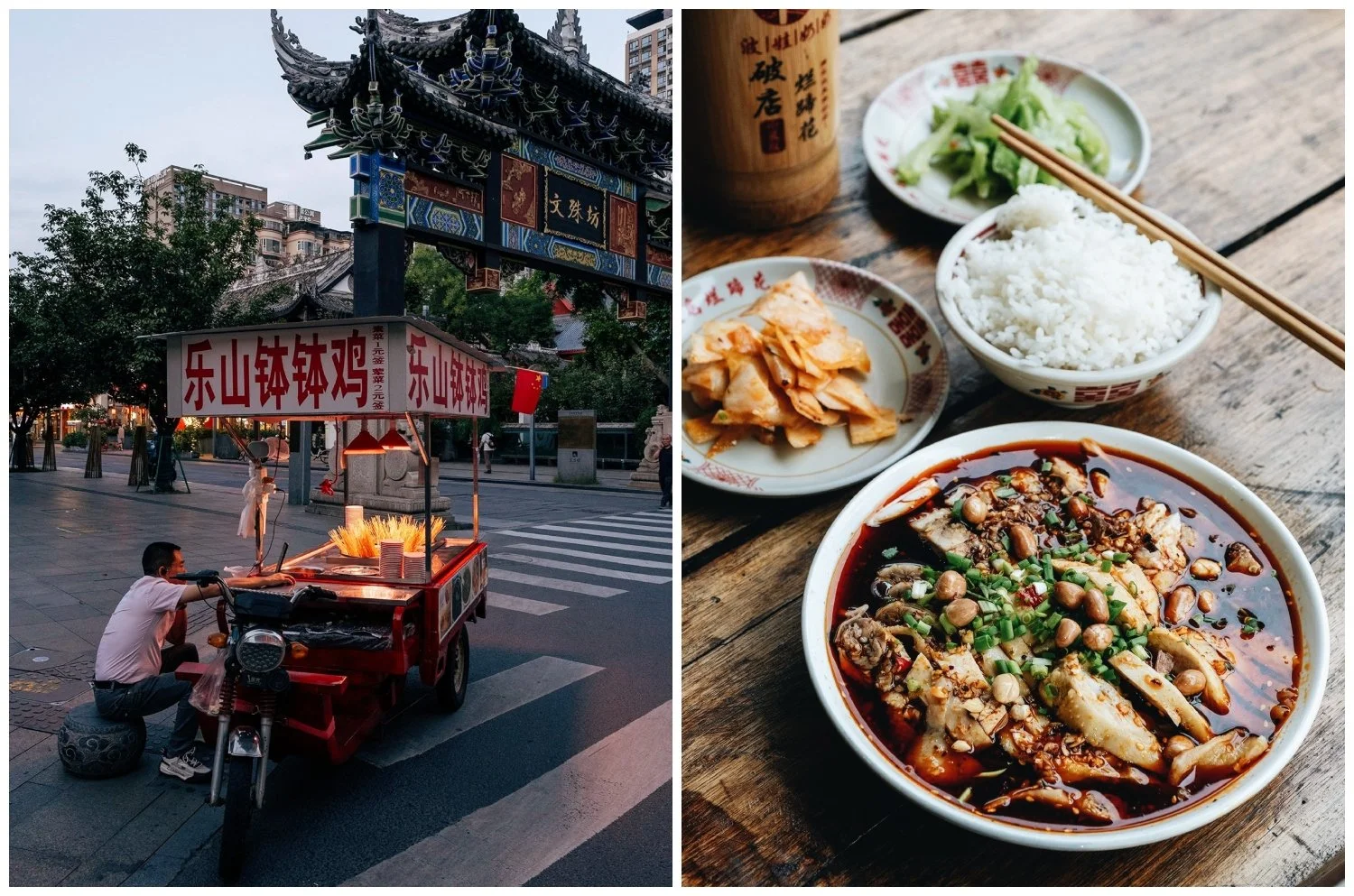
You see bāshì played out everywhere, but it peaks in the city’s legendary cāngying guǎnzi – literally “fly restaurants.” These are slightly chaotic, unpolished, hole-in-the-wall joints tucked deep into the fabric of the city. There is zero pretension; wealthy guys might arrive in luxury cars, sitting on the same cracked plastic pavement stools as construction workers, completely unbothered by the lack of air conditioning, just rubbing shoulders in the heat to eat incredible, cheap food.
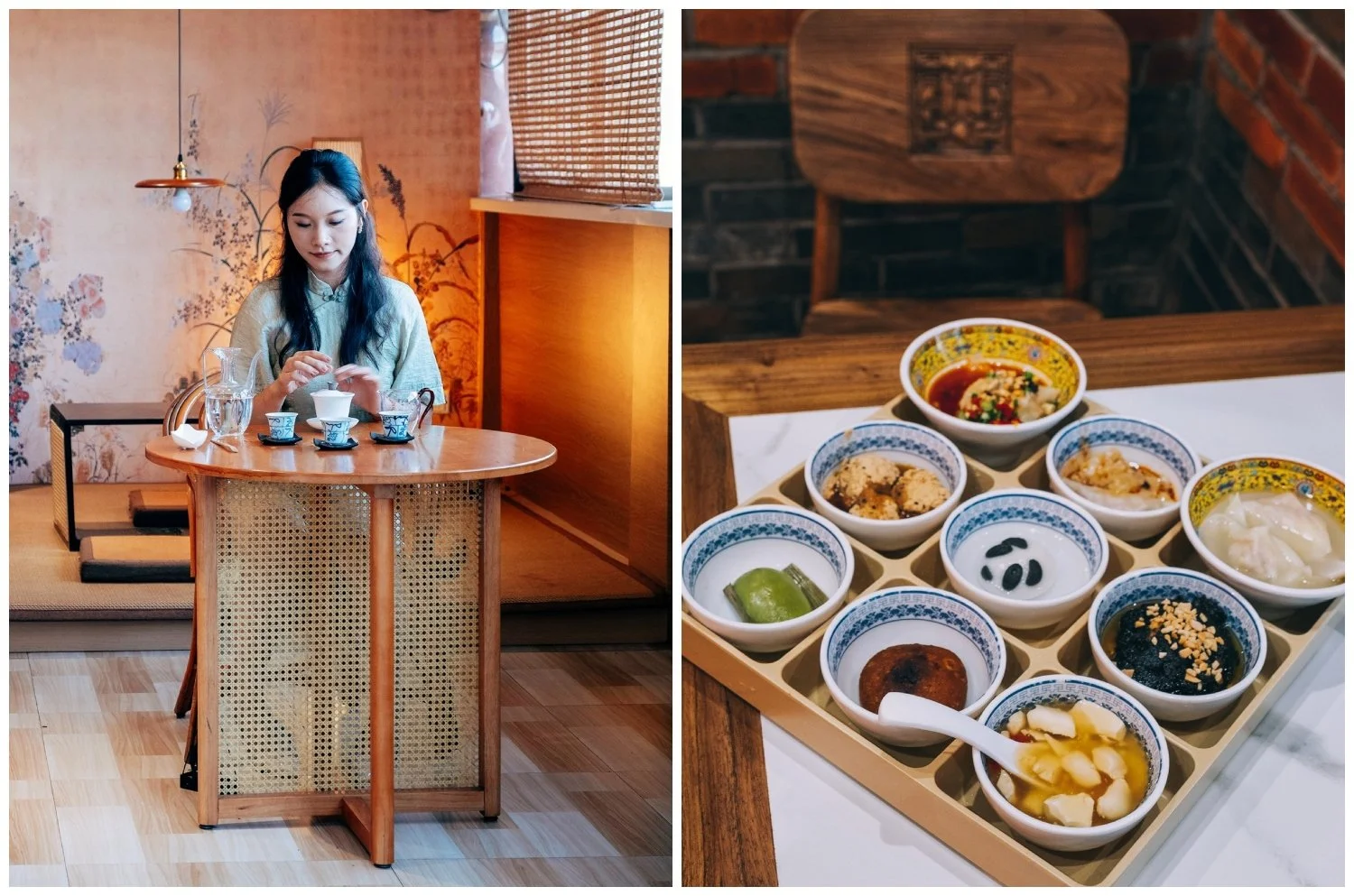
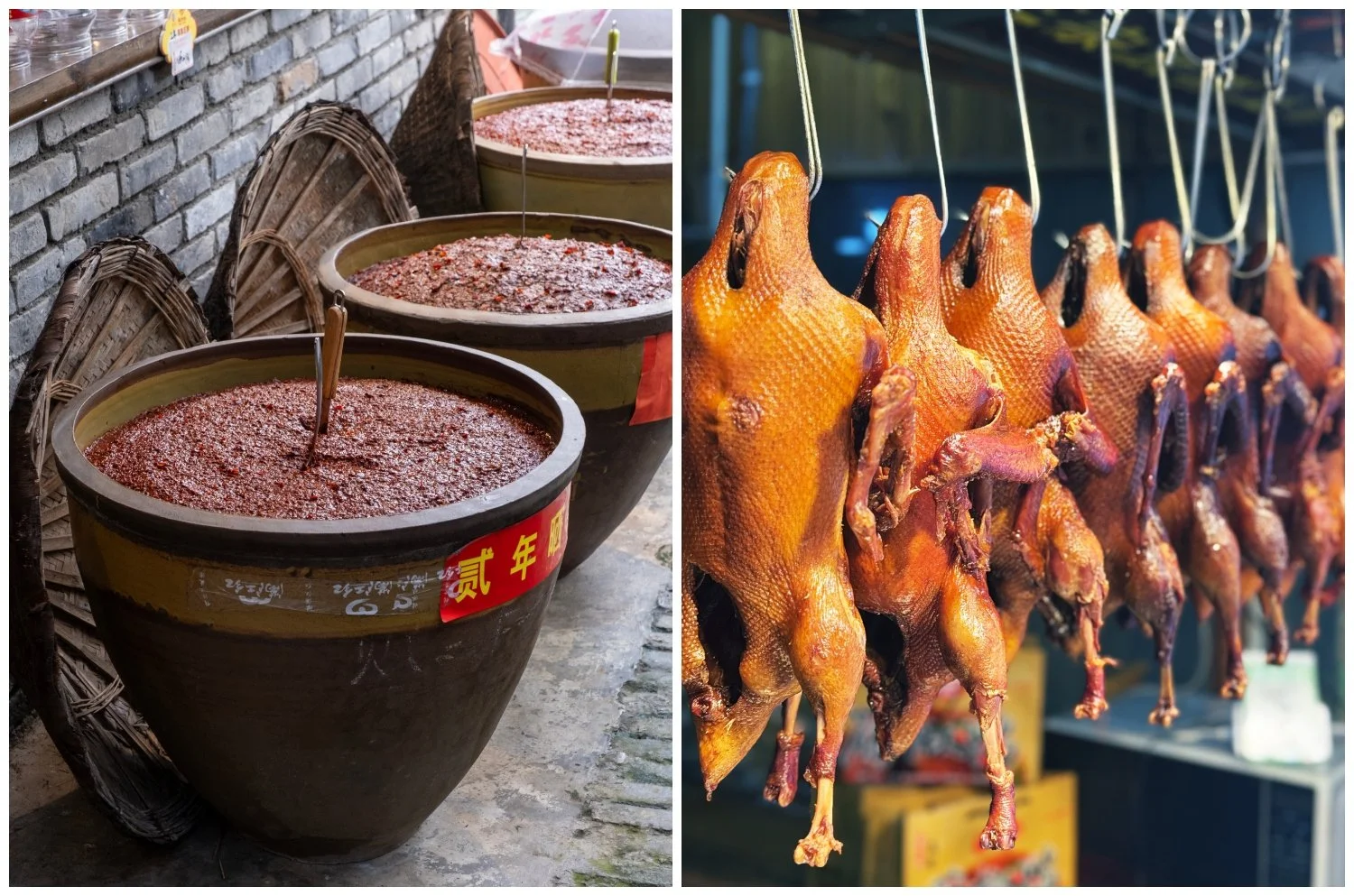
The food culture is built around a graze-as-you-go ethos, with an enormous appreciation for small dishes, snacks (xiǎochī), and noodles that have been perfected over generations. Mápó dòufu is one of the great Sichuan classics: soft tofu and minced meat – originally beef, not pork, hand-cut to retain texture – cooked with fermented chilli bean paste (dòubànjiàng), garlic and Sichuan peppercorn. Done properly, it is deeply savoury, fragrant and complex. The secret is using three-year-aged Pixian bean paste, which gives the oil its brick-red colour and dark, earthy umami. Dàndàn miàn, also rightly famous and originally a street food sold by travelling noodle vendors balancing shoulder poles, combines chewy noodles with an intense bottom-layer sauce of chilli oil, preserved mustard greens (yácài), minced pork, and nutty sesame paste.
Then there are the dishes that rarely travel beyond the province. If you walk into any old-school Chengdu restaurant, you’ll see tables crowded with local comfort foods that rely on subtle harmony rather than pure spice. Hóngyóu chāoshǒu – plump pork wontons slicked in pools of red chilli oil – show how Sichuan uses chilli as a seasoning rather than a blunt weapon. The heat is tempered with sweet aromatic soy sauce, raw garlic water, and a splash of black. vinegar.
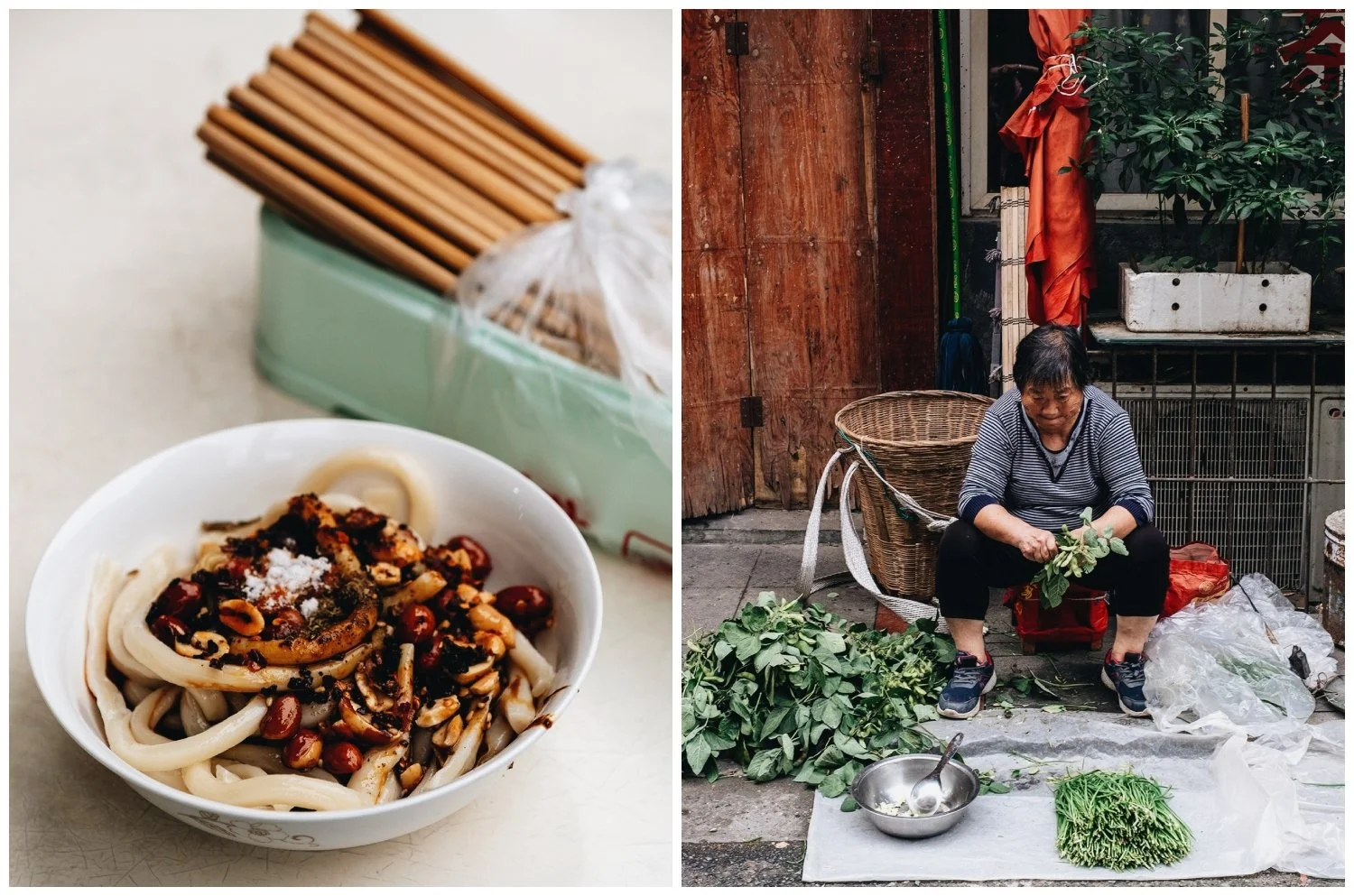
Tán shuǐ miàn, or “sweet water noodles”, are thick, hand-rolled, udon-like strands tossed in a dark blend of soy sauce, garlic paste, and roasted chilli oil. The texture is intensely toothsome and chewy, completely upending what most visitors expect from a Sichuan noodle bowl. That sauce? It relies on fùzhì hóngjiàngyóu – a sweet aromatic soy sauce simmered with sugar and spices until thick and syrupy. Mixed with rice vinegar and roasted chilli oil, it coats the noodles perfectly. Just beyond the city limits, Shuangliu District is famous for shuāngliǔ lǎomā tùtóu, or “mother’s rabbit heads”. Simmered in broth, heavily glazed in chilli oil, and served as a messy, cold, finger-licking street snack loaded with toasted sesame seeds and crushed peanuts, joining locals gnawing them while throwing back cold beers is one of Chengdu’s most fun food experiences! Another dish that challenges the Sichuan stereotype is zhāngchá yā, a tea-smoked duck. Smoked over tea leaves and aromatics, it carries a delicate fragrance rather than a blast of smoke – an elegant dish that reveals another side of Sichuan’s culinary tradition.
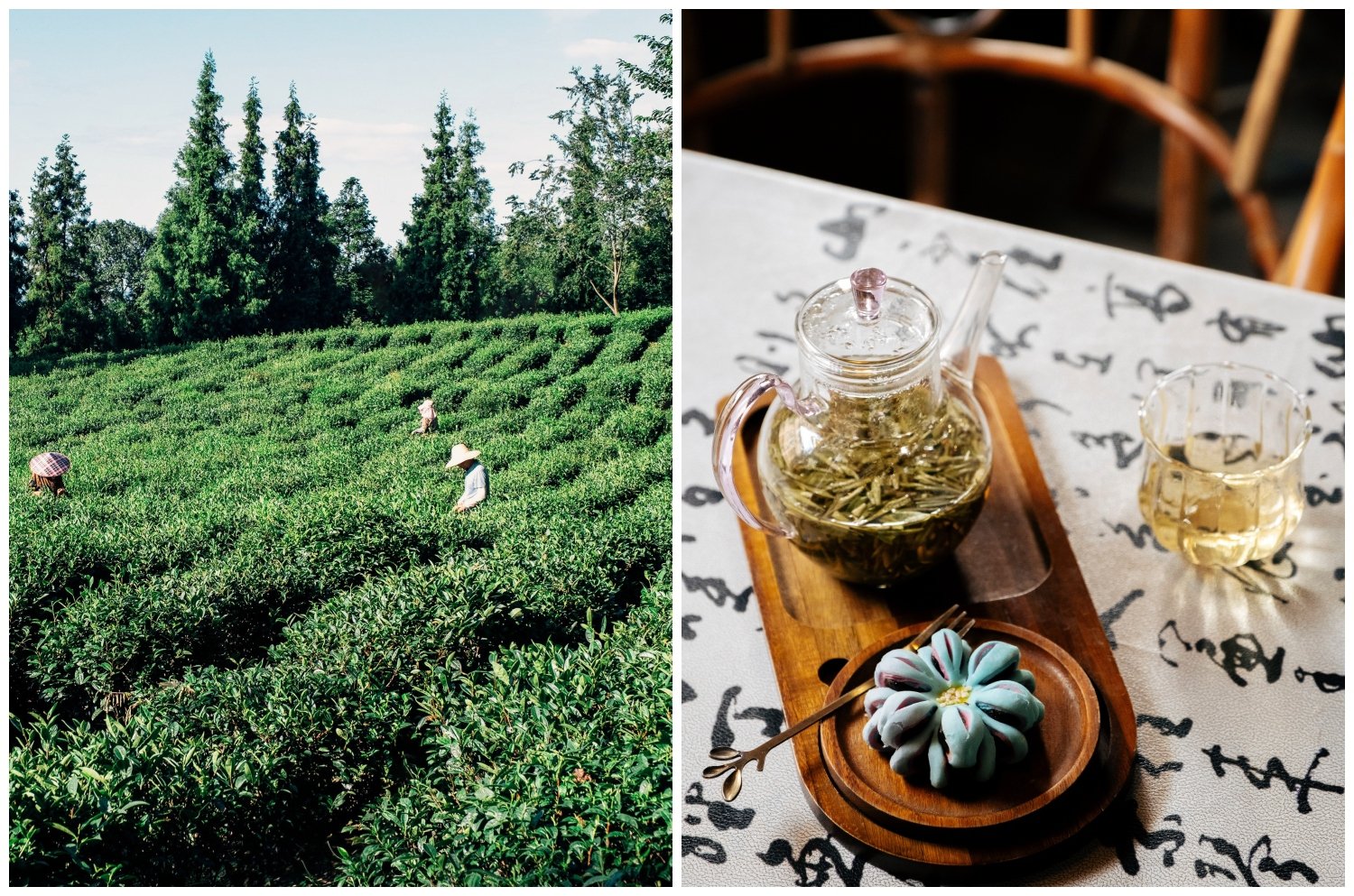
A few hours southwest of Chengdu, the roads climb towards Ya’an, where misty mountains, rushing rivers, and endless tiers of emerald tea plantations create one of Sichuan’s most ruggedly beautiful landscapes.
Nearby Mengding Mountain is one of China’s most important tea regions, with legends of cultivation stretching back more than two thousand years. Mengding Ganlu, or “sweet dew tea”, is a delicate, nutty green tea that was prized as an imperial tribute for centuries. It is unique because the leaves are rolled and pan-fired three separate times by hand to develop a sweet, floral finish. Today, walking through the tea fields, you can still see the relationship between landscape and tradition. Tea is not just a premium agricultural product here; it is part of the rhythm of daily life. On the mountain slopes, among the mist and bamboo, the connection between people and place feels tangible.
Ya’an is also famous for yǎyú, a prized river fish found in the cold, fast-flowing waters around the region. A relative of snow trout, it is famously particular about its habitat, requiring clear, oxygen-rich mountain streams. Historically sent as tribute to imperial courts, yǎyú remains a local delicacy today, with people travelling to Ya’an specifically to eat it slow-simmered inside heavy black earthenware pots with delicate, soft tofu and greens. It also carries one of Sichuan’s best pieces of culinary folklore: a distinctive sword-shaped bone in the fish’s head is said to be the blade of the goddess Nüwa, which she dropped into the river while repairing the broken sky. Fittingly, this same extraordinary river environment has given Ya’an another unlikely culinary claim to fame. The cold, pure waters that sustain yǎyú also provide ideal conditions for sturgeon farming, and the region is now one of China’s important centres of caviar production.
But you don’t need to sit in a restaurant to understand how the landscape dictates the food here. Wander into Ya’an’s main food market and the mountain freshness is immediately obvious. The stalls are piled high with enormous white radishes, vibrant carrots, seasonal foraged mushrooms and crisp celtuce, while vendors assemble the local fresh spring rolls (yǎ’ān chūnjuǎn).
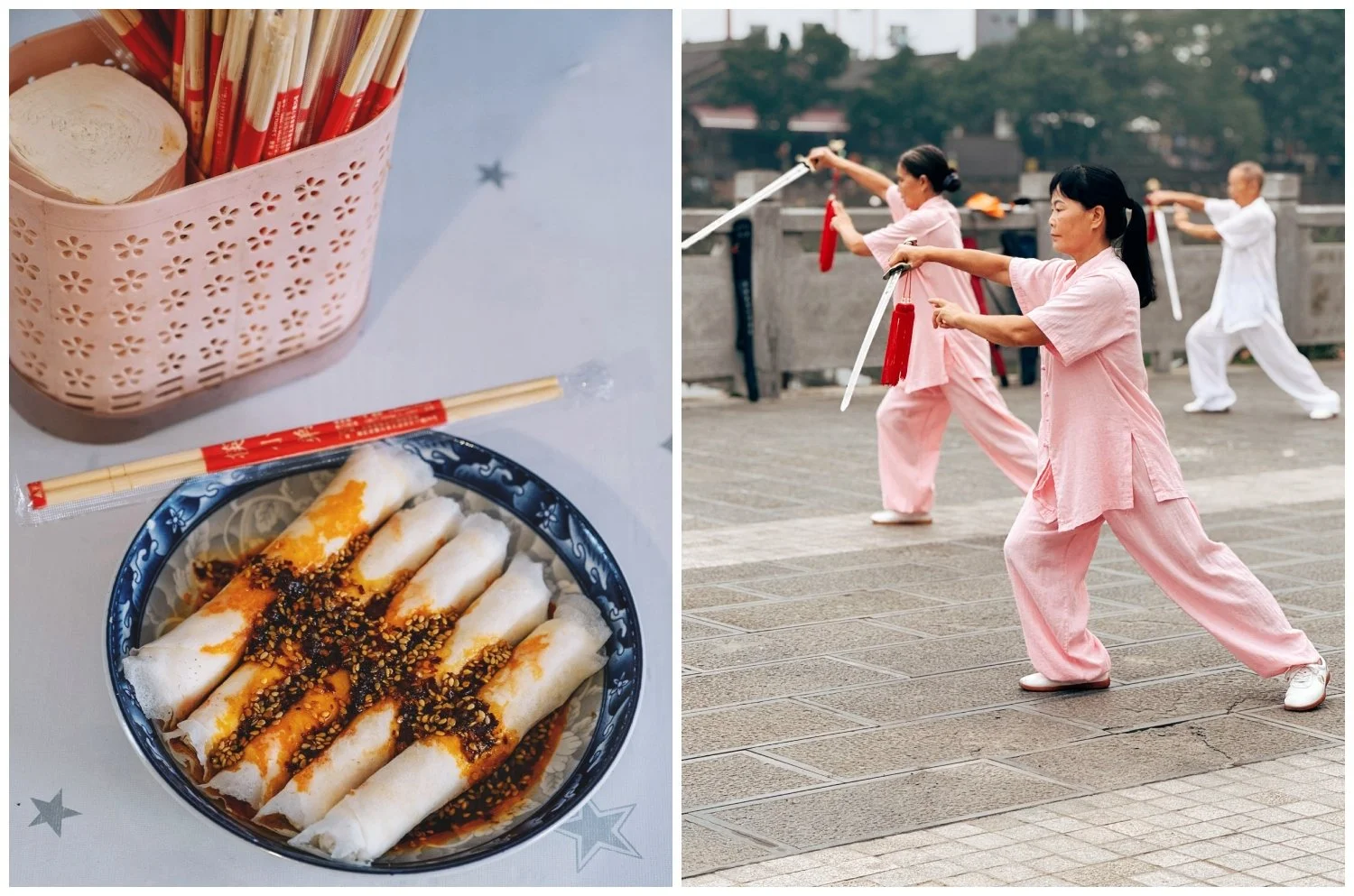
These completely upend what most foreigners expect when they think of Sichuan food – or spring rolls. They’re not fried but served cold, their soft, almost translucent wheat wrappers more akin to Southeast Asian popiah. Each is packed with a crunchy mix of sweet-and-sour pickled white radish, shredded vegetables and crisp sprouts before being smothered in a sweet, tangy, sesame-laden and deeply savoury chilli sauce. They taste as fresh and vibrant as the hills surrounding the city and make a surprisingly excellent breakfast.
This combination of unpolished landscape, deep regional history, and food woven straight into the geography is what makes Sichuan so compelling. The dishes make absolute sense because of exactly where they come from.
Part 2: Come with me and poke around Sichuan’s smaller, tucked-away places - coming soon!
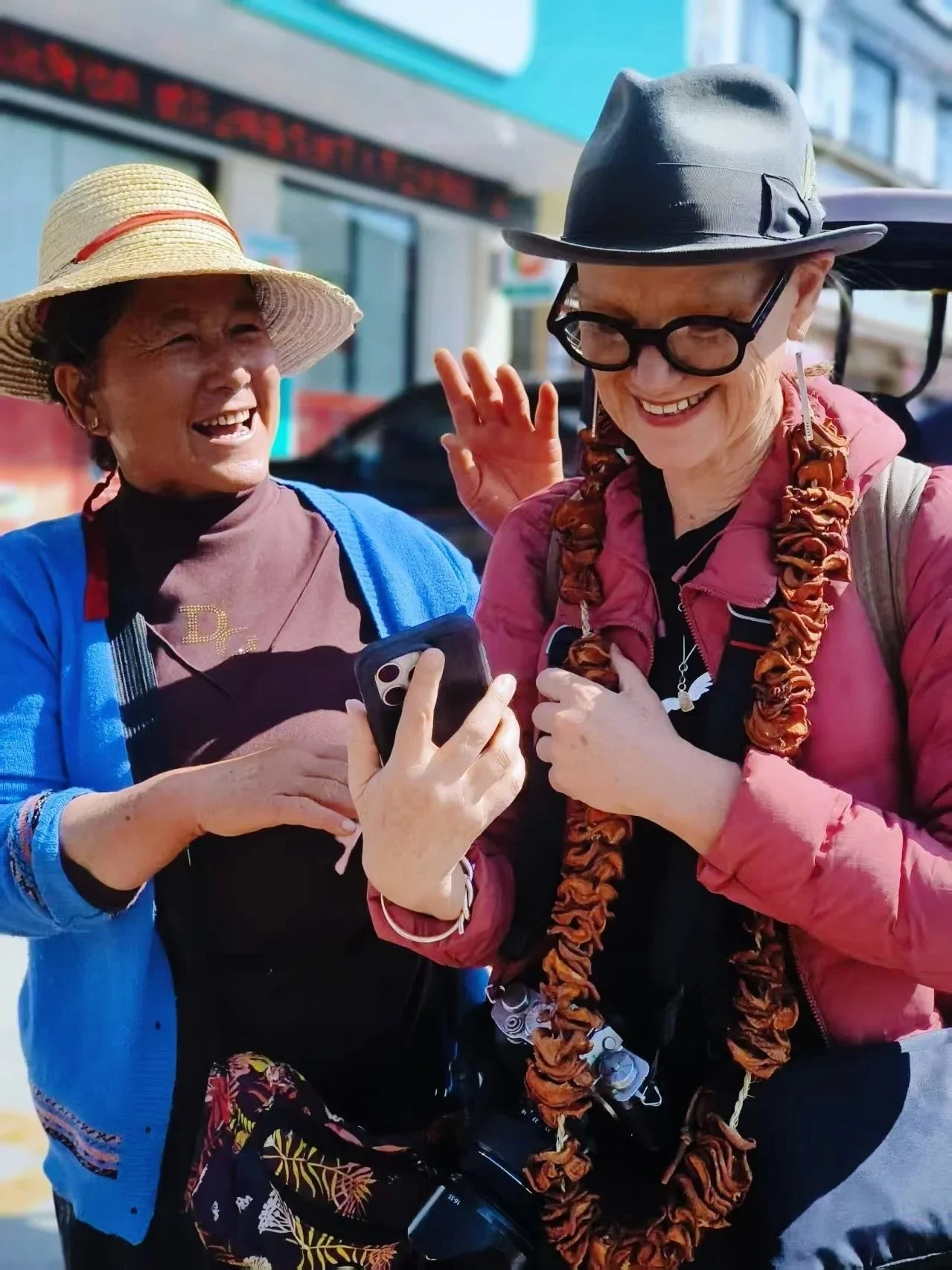
Leanne Kitchen has spent more than three decades working with food; as a chef, food writer and former Food Editor of Australian Gourmet Traveller. She is the founder of Elsewhere & Beyond, where she creates small-group food journeys for curious travellers.