Sichuan’s Singular Teahouse Culture
By: Leanne Kitchen
There are plenty of reasons to love Sichuan – pandas, food, the local opera, extraordinary natural beauty, and glimpses into Tibetan culture. But honestly, you could ditch the sightseeing, decamp to a teahouse, sit with locals, break out the melon seeds and be perfectly happy. You’ll be embracing the local modus operandi if you do: namely, to slow down, chill out and enjoy life. Amen to that!
Teahouse culture is about far more than tea. Historically, teahouses were places to exchange news, meet friends, conduct business, play games and generally shoot the breeze. Hanging around in a teahouse is one of the best places to observe how people actually live here – the province even has a word for the art of doing very little: shuǎ(耍). The rest of China tends to characterise this as “lazy”, but it’s not. It means to hang out, have fun, while away time – and it goes a long way to explain the importance of teahouses in Sichuan life. Thanks to the teahouse, Chengdu feels more laid back than most other Chinese cities.
Teahouses run the entire gamut from grand and polished to historic to gloriously scruffy neighbourhood establishments, found everywhere from temple precincts to riverside gardens and even tucked into the corners of parks. When visiting, the most important rule is to slow down and stay awhile. The great pleasure of a Sichuan teahouse is discovering that absolutely nothing needs to happen.
How to enjoy a Sichuan teahouse
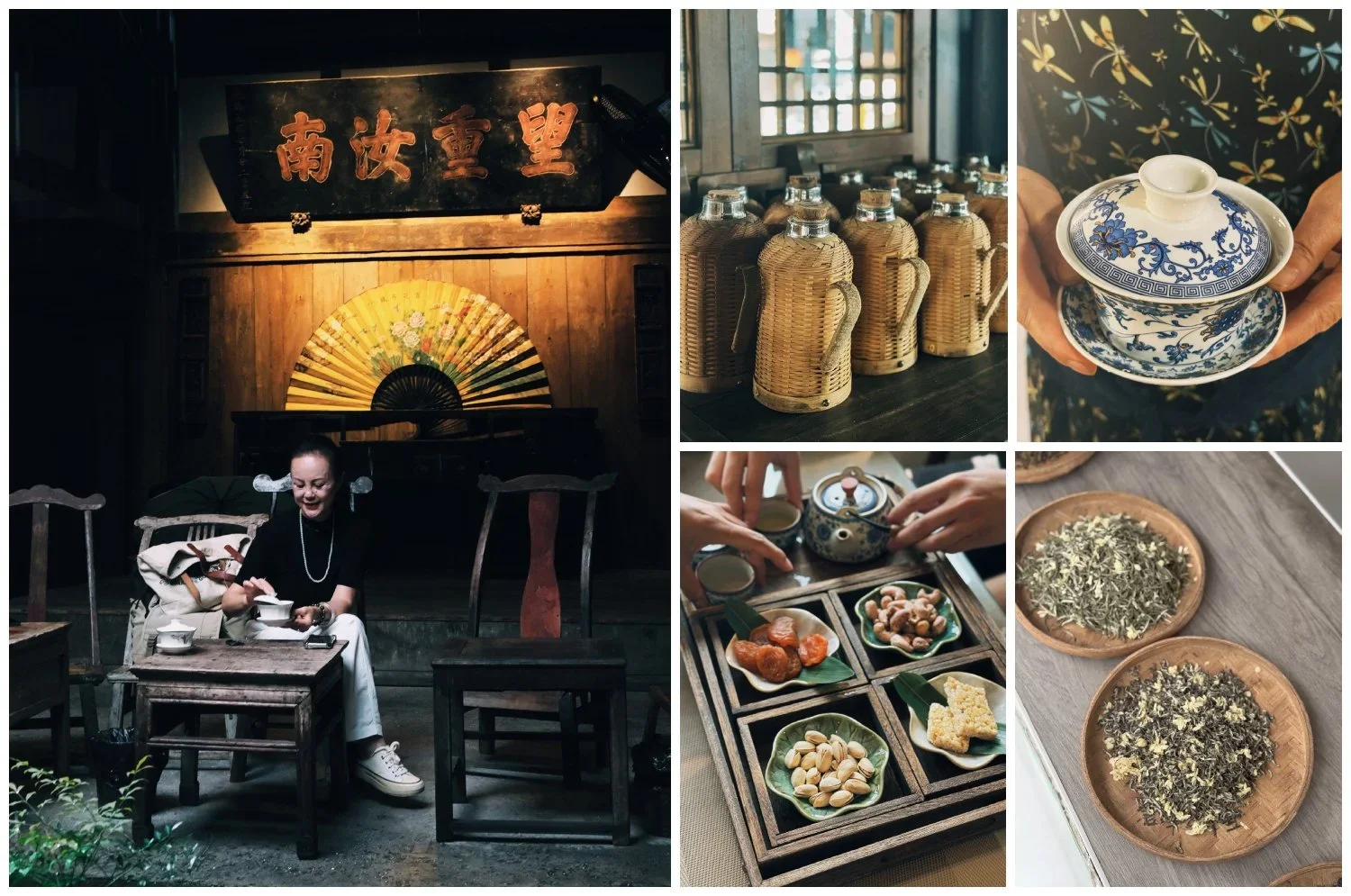
Using a gàiwǎn (盖碗) – the lidded Chinese bowl traditionally used for tea in Sichuan. You drink by holding the lid slightly open to keep the leaves back while you sip.
Don't knock it back. Teahouse tea is something to linger over. One gàiwǎn can occupy you for hours, with repeated top-ups of hot water.
Order what the locals drink. Jasmine tea (huāchá), particularly the inexpensive everyday blends known as sānhuā, is a classic Chengdu choice. Bìtán piāoxuě is jasmine-scented green tea, while zhúyèqīng is a delicate green tea associated with nearby Emei Shan. You'll also encounter legendary brews like tiěguānyīn from Fujian province, lóngjǐng from Hangzhou and chrysanthemum tea.
Tea quality isn't necessarily the point. The experience is as much about the setting and company as what's in the cup. Don't approach every tea as though you're at a formal tasting.
Eat something. Sunflower or watermelon seeds, peanuts, dried, salted broad beans and local snacks are made for long sessions at the tea table.
Watch what happens around you. Mahjong, cards, newspapers, conversation, naps, chess, cǎi ěr (the famous Sichuan ear cleaning service), and the elaborate pouring of boiling water are all part of the scene.
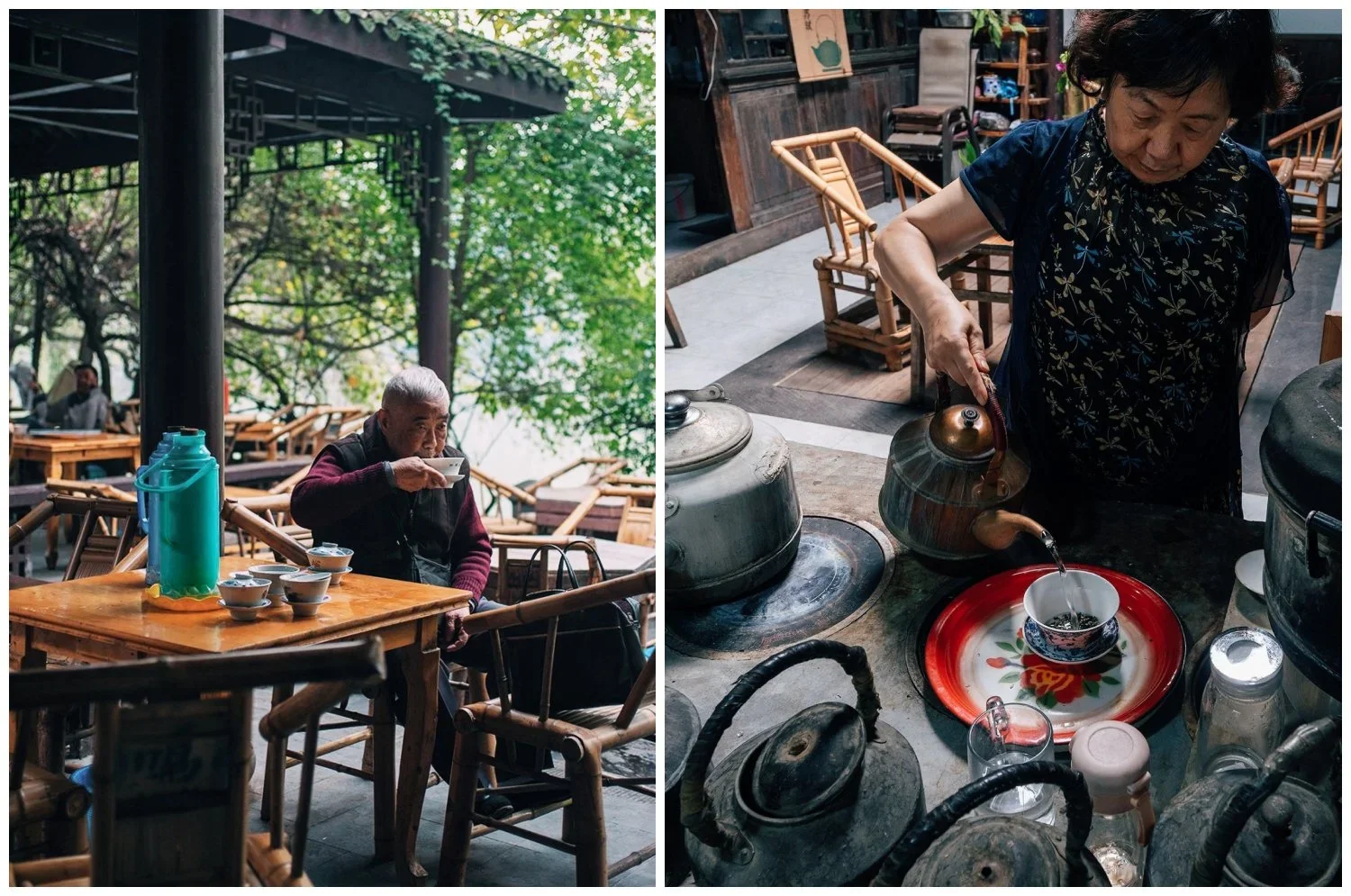
Let the staff refill your water. At most teahouses, you’ll be given a huge thermos of hot water to top up your cup. Some places might still use the chángzuǐ hú, a long-spouted kettle which, in the right hands, is used with acrobatic flair.
Don't worry about doing it “wrong”. This isn't a Japanese tea ceremony. There's no need for reverence or silence. The whole point is that this is everyday life.
Heming Teahouse – the great classic
The mother of all Chengdu teahouses is the sprawling Heming Teahouse (鹤鸣茶社), in the middle of the lovely People's Park. More than a century old, it’s firmly on the tourist radar, but has retained much of its local character. Depending on what you order, tea is inexpensive and you can literally extend a single tea session for hours without any obligation to keep spending.
From early morning, people come to smoke, play cards, read the paper, chat, have their ears cleaned or simply while away the hours over endless cups of tea. Ear cleaning is one of the enduring rituals of Chengdu's teahouse culture: practitioners work their way around the ear with a curious array of tiny tools, sometimes finishing with a gentle tinkling that is as much theatre as treatment. Honestly, it feels like gentle tickling.
Adjacent is the fabulous Zhong's Dumpling Restaurant (钟水饺), family-owned since 1893, where zhong shuǐjiǎo – pork dumplings in spicy sauce – sit alongside tiánshuǐmiàn, Chengdu's udon-like sweet-savoury noodles, and hóngyóu chāoshǒu, wontons in red chilli oil. Yum!
Jinqin – a neighbourhood teahouse
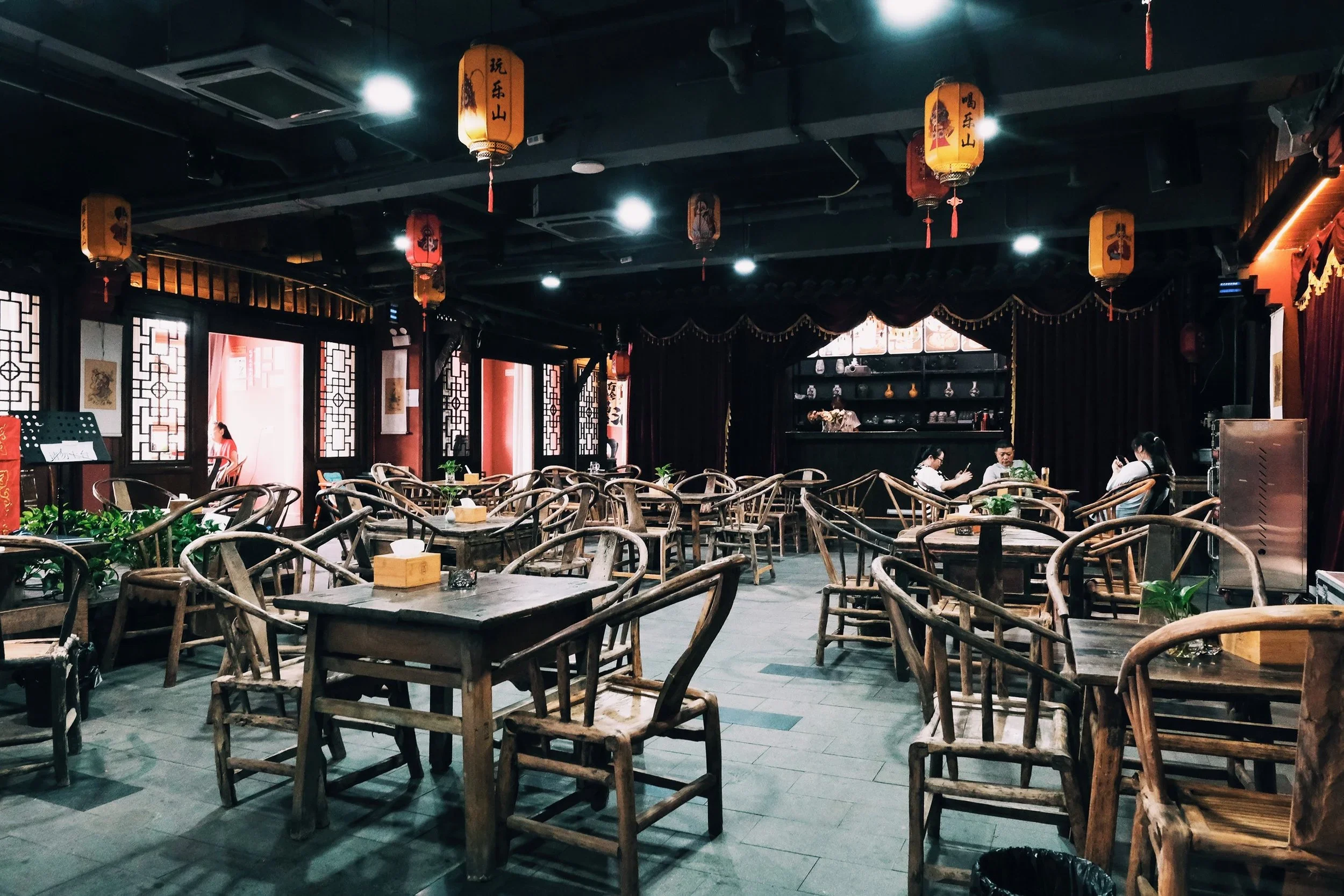
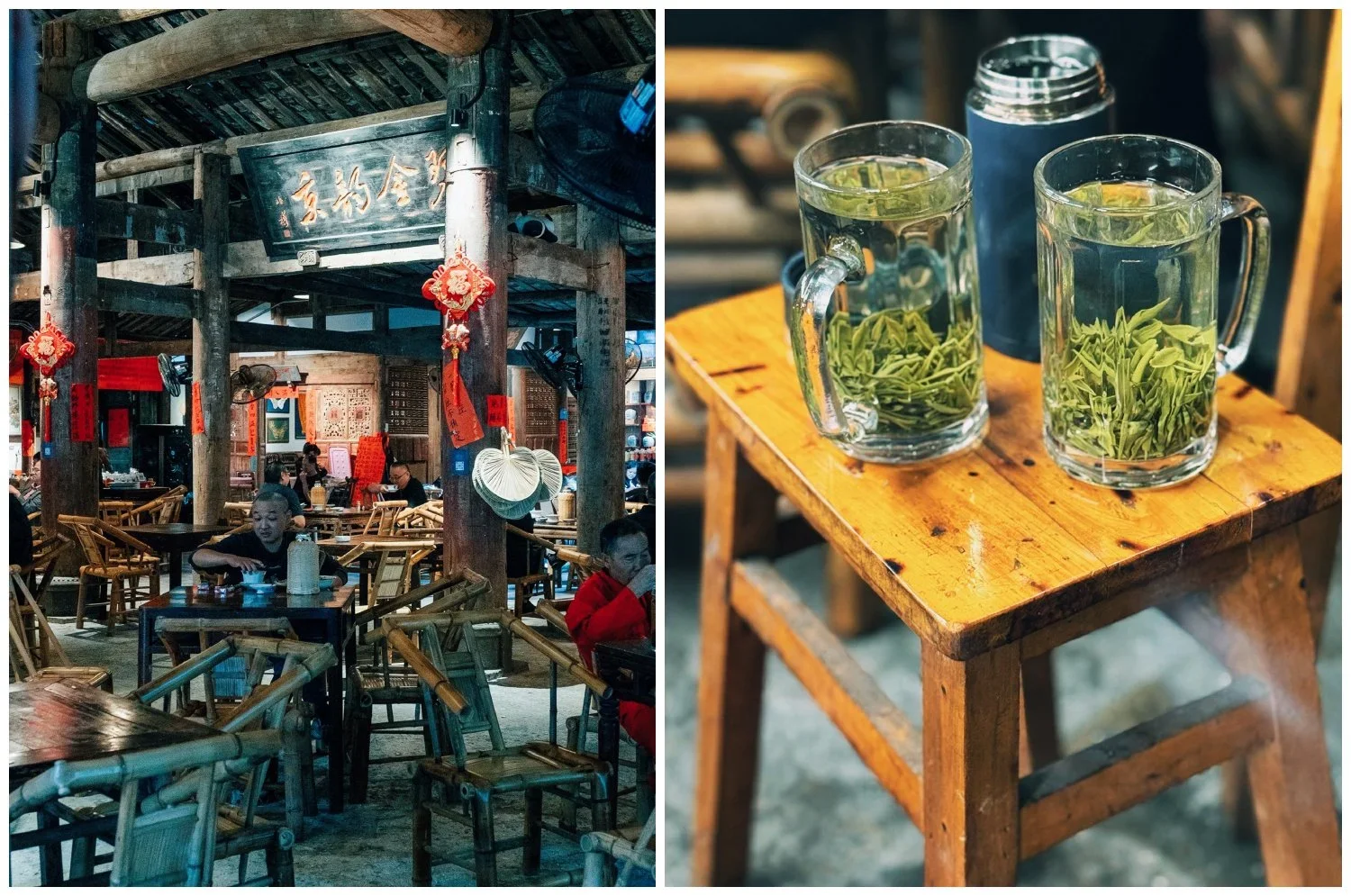
One of my favourite Chengdu teahouses is Jinqin Old Teahouse (金琴老茶馆), tucked away in the Fuqin neighbourhood. It has an incredible atmosphere, with bamboo chairs, old-style architecture, locals sitting around chatting and playing cards, retirees watching nostalgic movies on their tablets, and that wonderful sense that people have come here simply because they have nowhere else they need to be.
Interestingly, Jinqin presents like an untouched centuries-old survivor, but it’s actually a reconstruction drawing on traditional western Sichuan architecture and old materials, and it has recreated the social function and atmosphere of the old neighbourhood teahouse remarkably well. Just down the road from a Sichuan Opera Theatre, it regularly hosts live performances, and you just might luck into one.
The old teahouses beyond Chengdu
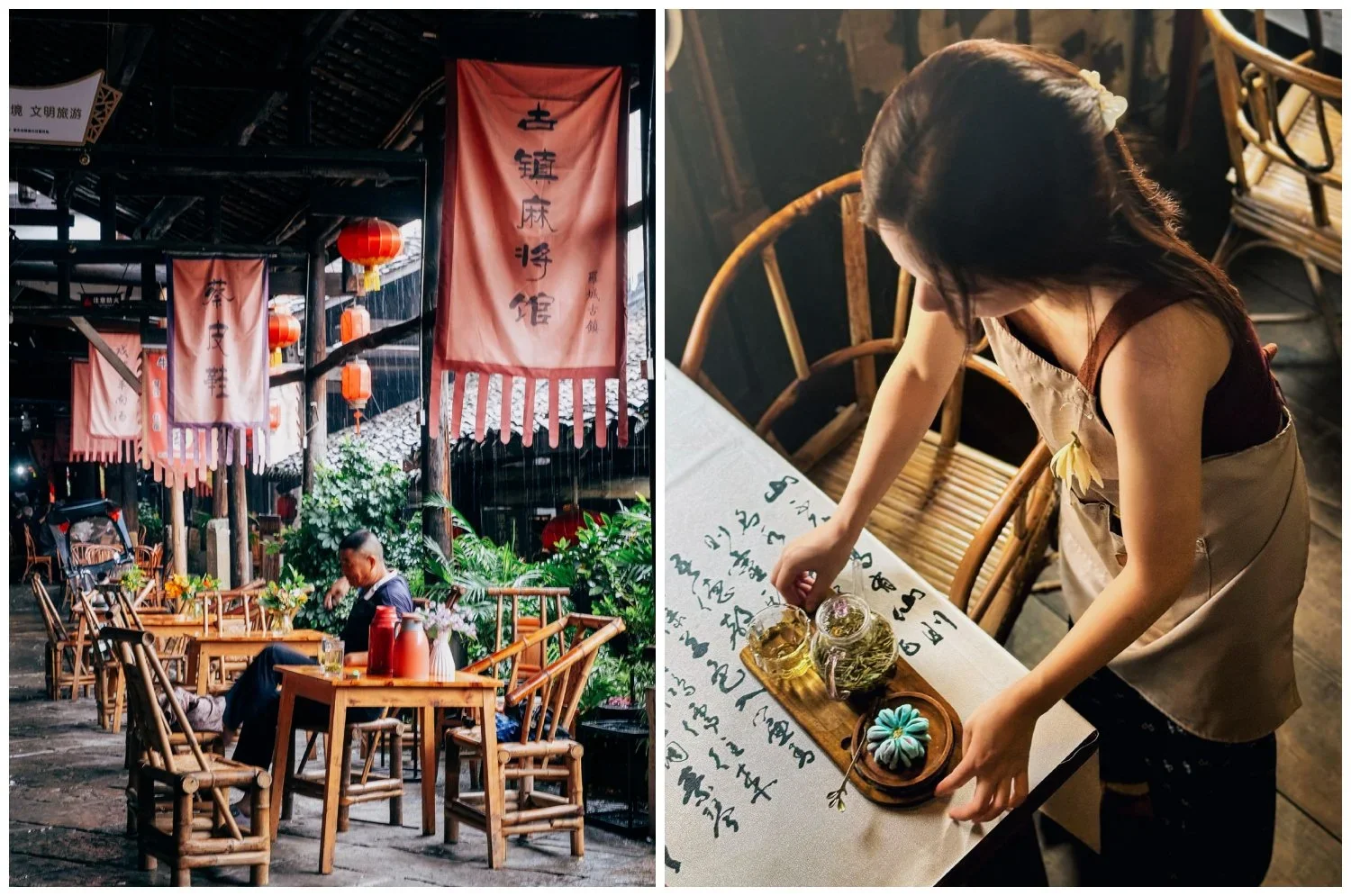
Some of the most atmospheric teahouses are outside the city; wherever you travel in Sichuan, it’s not hard to find a teahouse. In some of the older towns and villages you’ll still find wonderfully characterful places.
In the old town of Luocheng, near Leshan, the extraordinary boat-shaped main street is lined almost continuously with teahouses, giving the impression of one enormous, open-air tea salon stretching the length of the town. It’s a particularly good place to see how deeply tea-drinking is woven into Sichuanese social life and the old village is atmospheric.
Also near Leshan, the riverside town of Suji is more polished and has become something of a tourist magnet, but its waterfront teahouses and old buildings are still lovely. Arrive early and you can enjoy the riverside at its most peaceful, before the day-trippers descend.
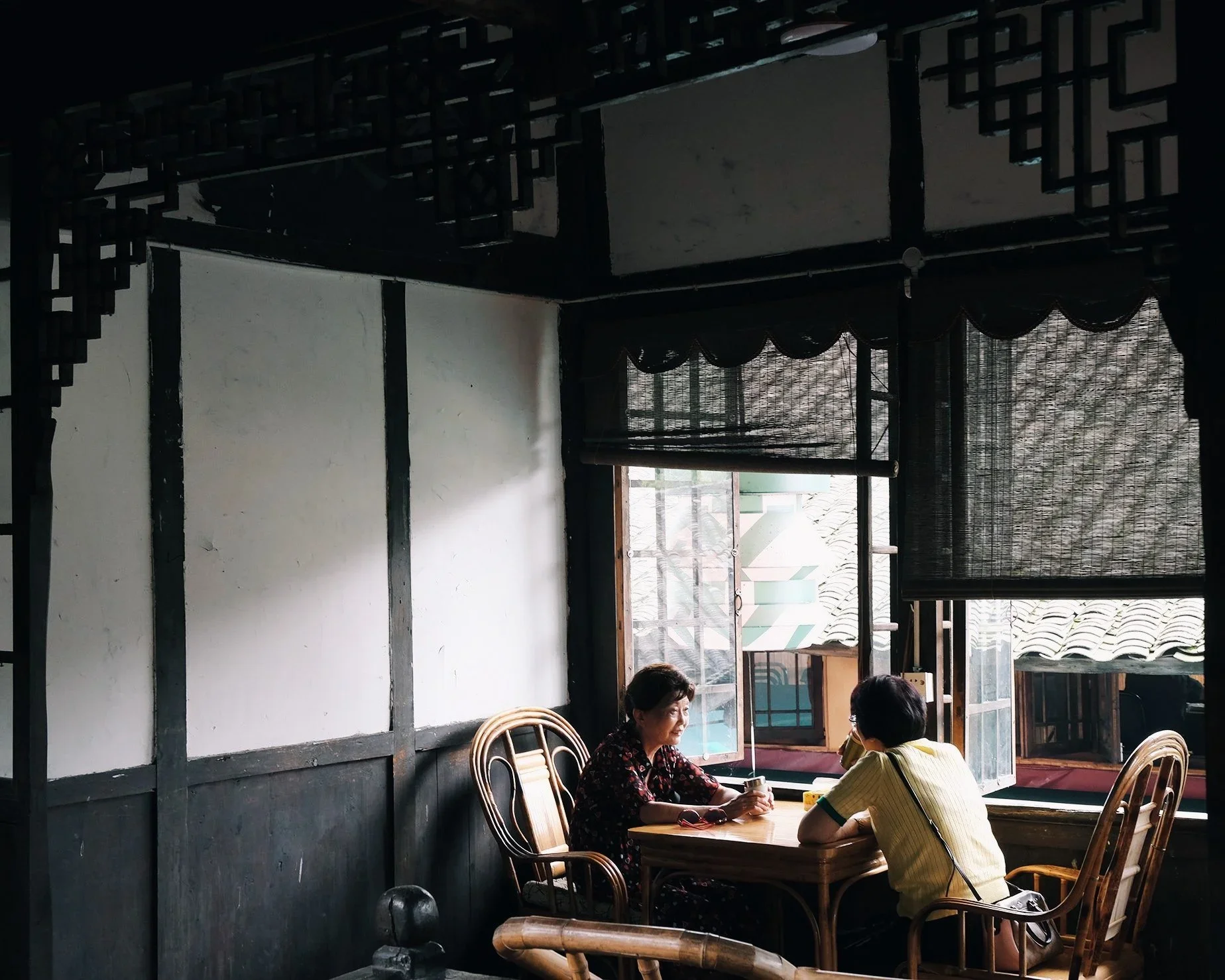
In Yuantong Ancient Town, north-west of Chengdu, the history goes back more than 1,600 years. Built around the meeting of three rivers, it became an important waterborne trading centre and was prosperous enough in the Qing dynasty to earn the nickname “Little Chengdu”.
Tucked into its old streets is Xiajia Teahouse (夏家茶楼), a wonderfully unselfconscious old tea house in a two-storey timber building with a central courtyard and an old well. Owned by the same family for generations, the tea-making water is still drawn from the original well in the floor, then heated in traditional kettles over a stove.
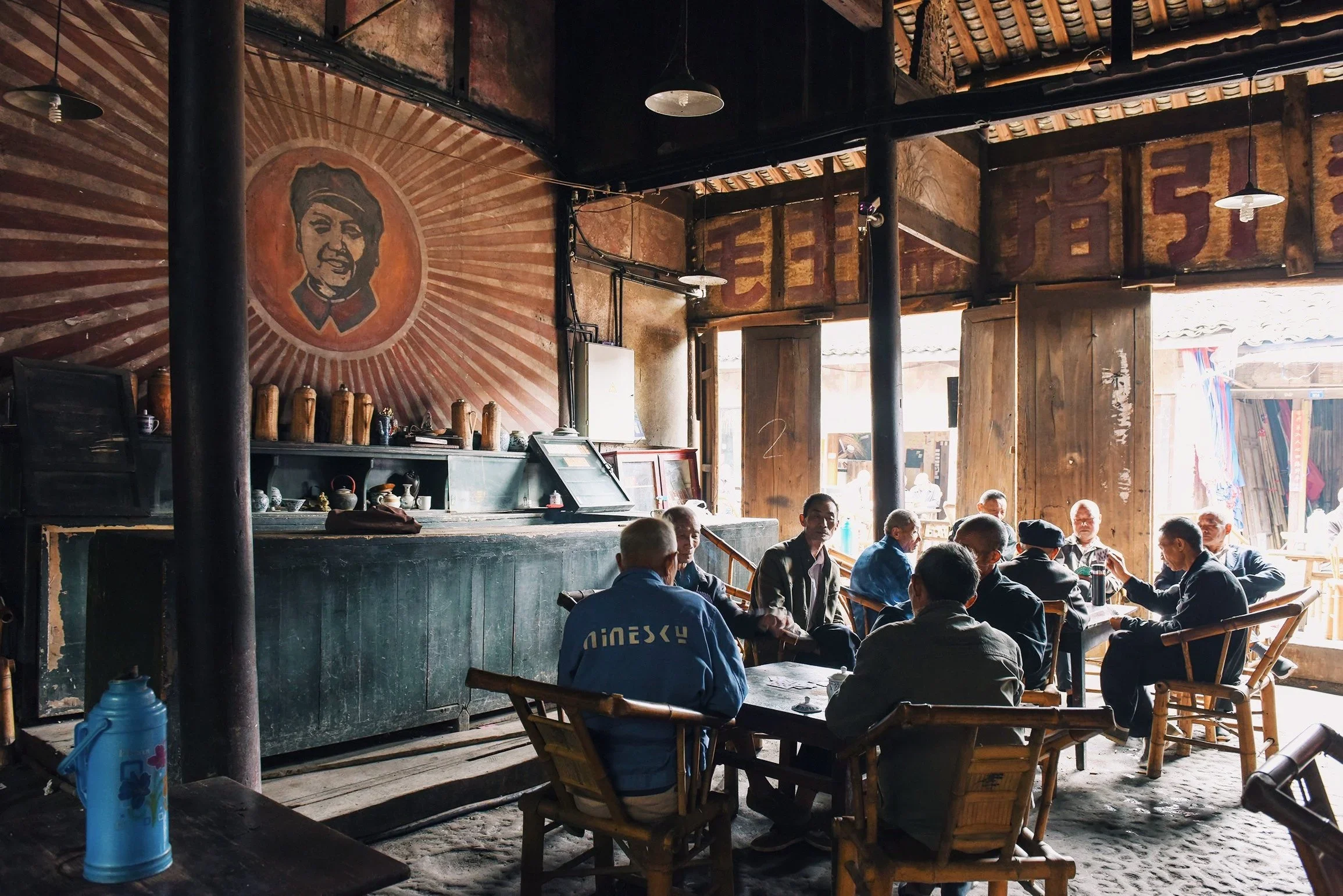
Then there is Pengzhen's Guanyin Pavilion Old Teahouse (双流彭镇观音阁老茶馆), one of the most remarkable survivals of old Chengdu teahouse culture and about 30km from the city centre. The building began life as a Buddhist temple in the Qing dynasty before becoming a teahouse. Inside, you’ll find creaky bamboo chairs, faded walls, smoke and steam – and the extraordinary 老虎灶 (lǎohǔ zào), or “tiger stove”, the traditional wood- or coal-fired stove once commonplace in Sichuan teahouses, keeping huge kettles of water constantly boiling.
Guanyin Pavilion has become something of a pilgrimage for photographers and domestic tourists, with walls still carrying genuine traces of the Cultural Revolution – fMao imagery and red political slogans left from the period. But come early, and you can still feel the old rhythm of the place when the clientele are all older locals – cards being played, people talking, and the stove puffing steam as the morning slowly unfolds.
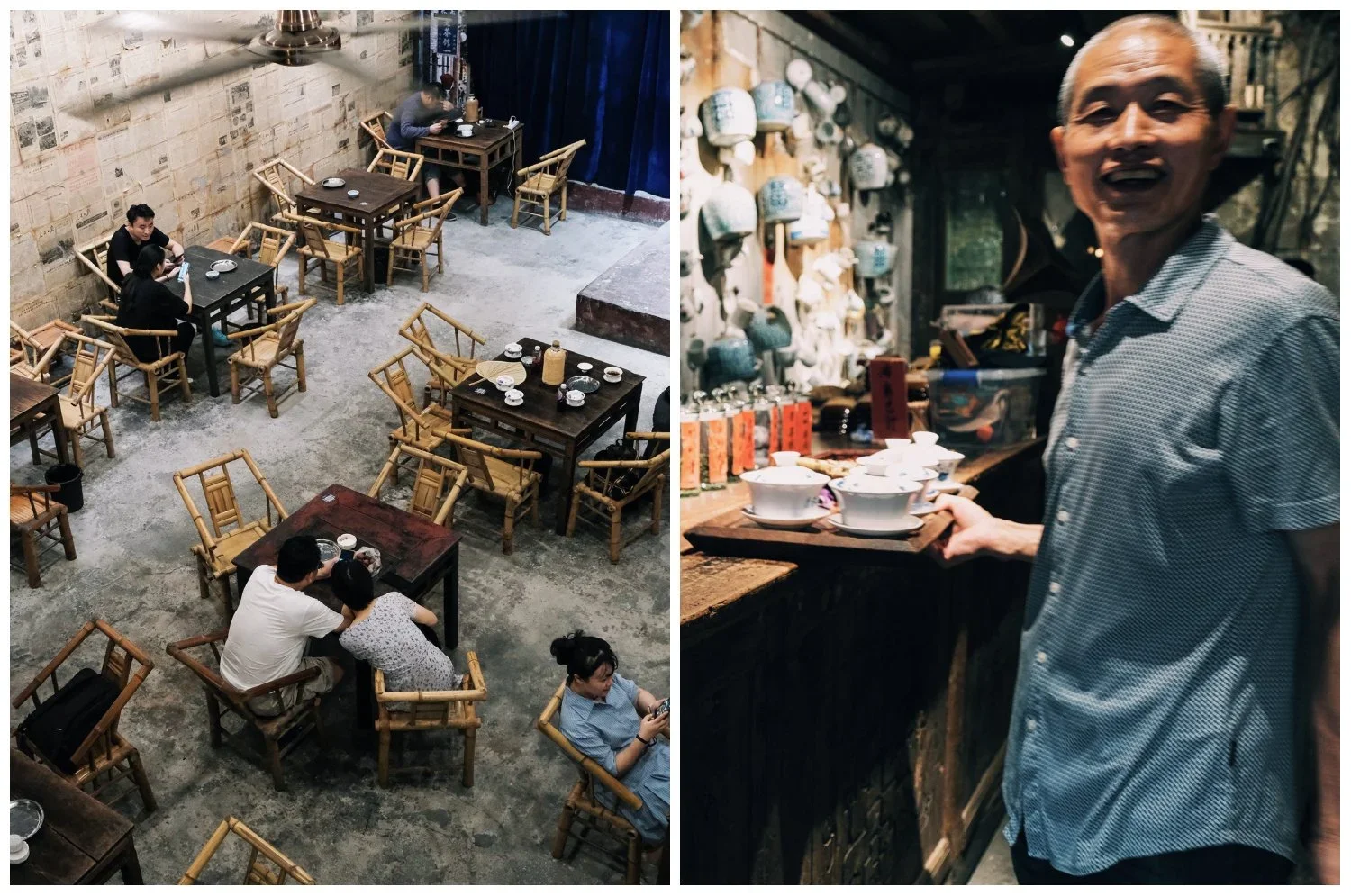
Cross into Chongqing and the teahouse tradition changes subtly with the city. The pace is still leisurely, but the atmosphere can feel grittier, earthier and more intensely urban.
One of the most famous survivors is Jiaotong Teahouse (交通茶馆) in Huangjueping. It opened in 1987 in what had been a transport company's staff canteen and retains the visual language of a Chongqing teahouse from the 1970s and '80s: worn wooden tables and benches, old fans, enamel or ceramic cups, thermos flasks and walls that have accumulated decades of smoke and wear.
It's close to the Sichuan Fine Arts Institute, which has helped give it a slightly artistic following, but its essence remains wonderfully ordinary. Retirees, neighbours, students and curious visitors sit alongside one another drinking tea, playing cards and chatting.
It has also acquired a cinematic afterlife: scenes from the 2006 film Crazy Stone were filmed there, helping turn an everyday neighbourhood teahouse into something of a cultural landmark.
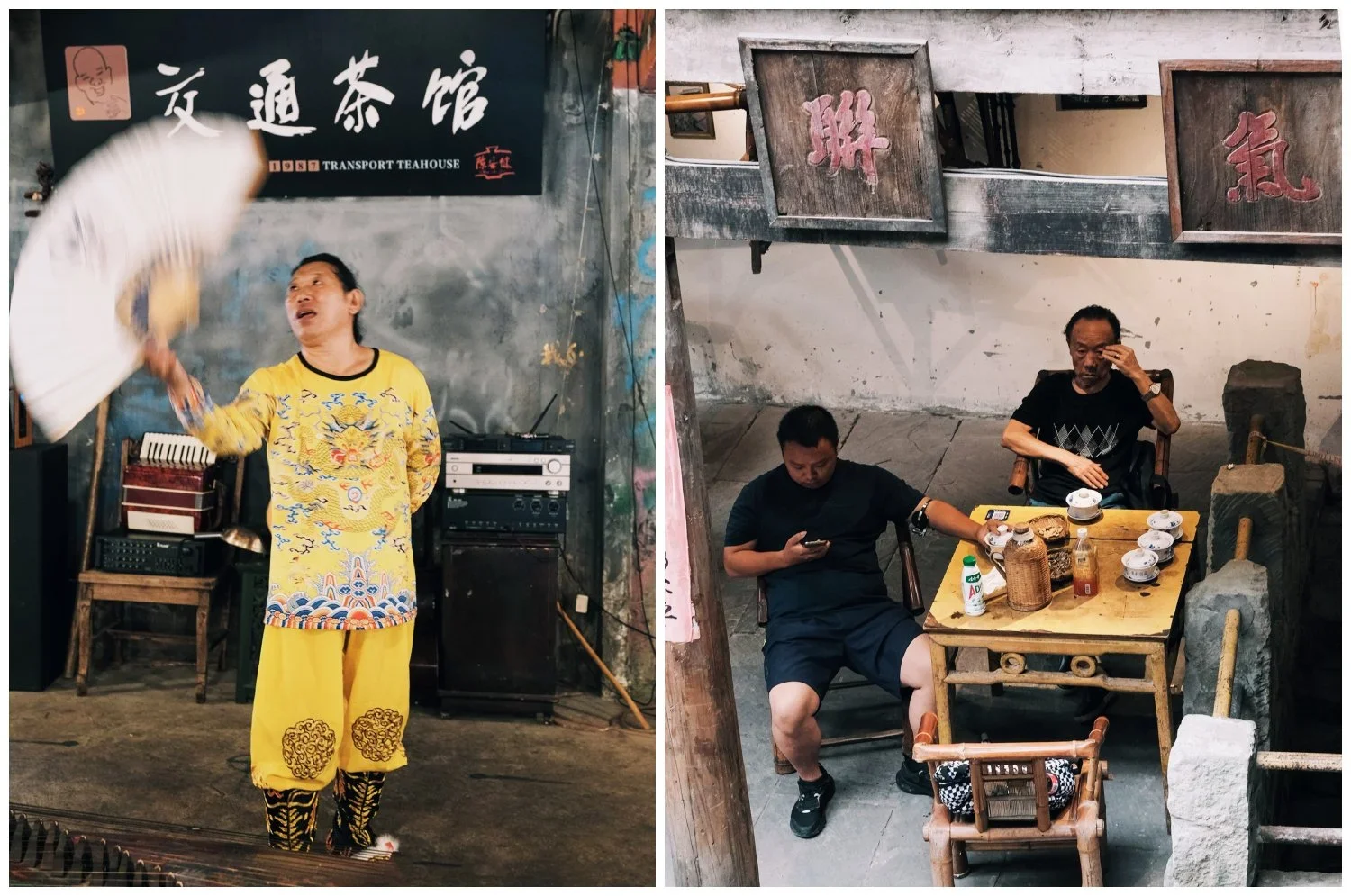
For a taste of old Chongqing, seek out Chang Le Yong Kang Teahouse (长乐永康老茶馆), tucked into Shancheng Alley, one of the city’s old hillside lanes. The teahouse sits behind a historic stone gateway in a timber building, with a courtyard, bamboo chairs, an old air-raid shelter and an overall jumble of the kind of details that make Chongqing so darned compelling. There are often storytelling and traditional music performances in the huge space downstairs, adding another layer to the experience.
What I particularly love about places like this is that the tea is almost beside the point. You are sitting in the middle of old Chongqing life – listening, watching, drinking tea, perhaps eating a few melon seeds – while the city climbs and tumbles away outside. It is exactly the kind of place where you should put the camera down for a while and simply stay.
Let’s go traveling…