Coconut and cardamom layer cake with caramel ganache
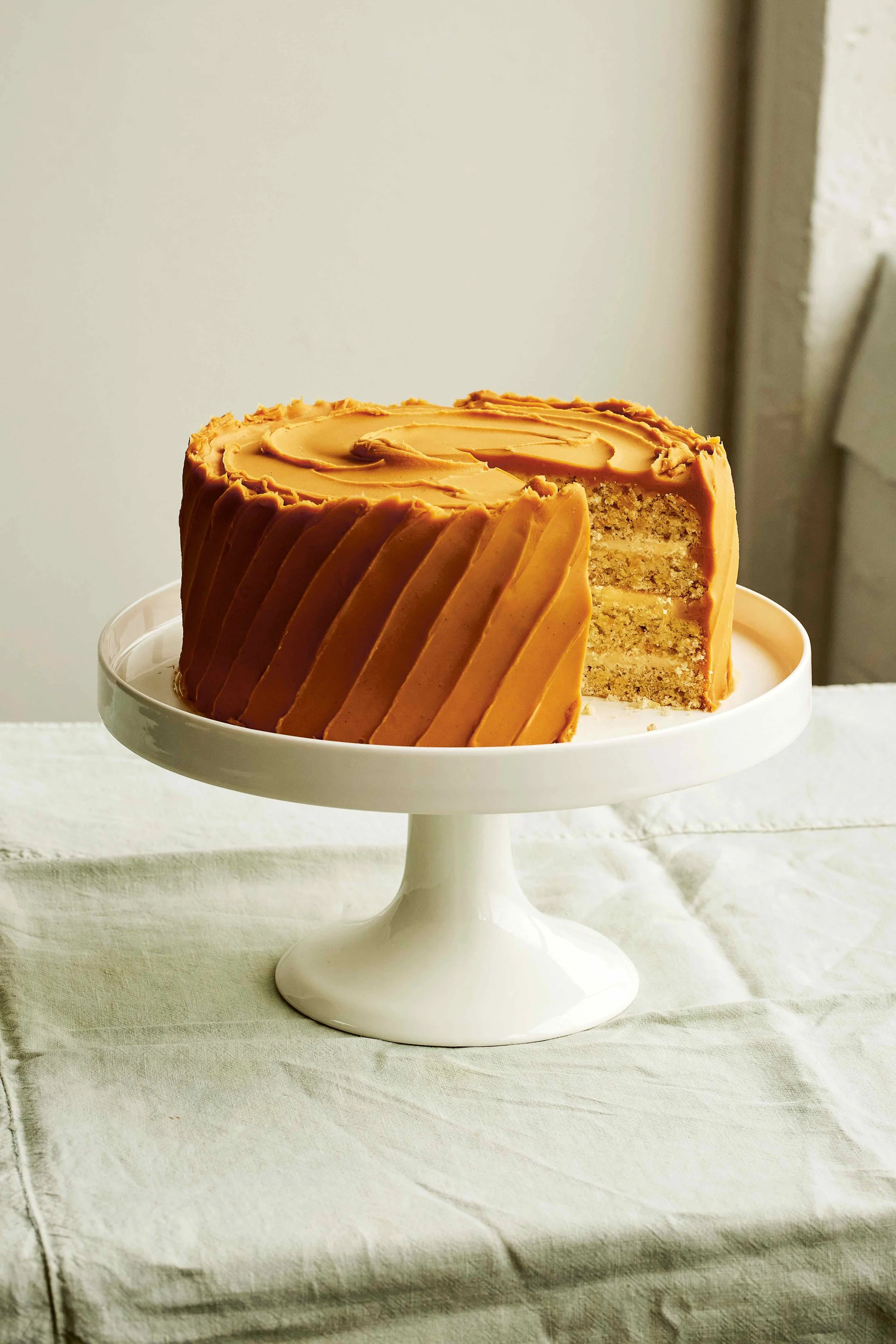
“This is a glorious cake for a very special occasion. I’m not going to sugarcoat it for you, though, it’s a lot of work, so the person you’re making it for needs to be worth it! Cardamom, coconut and caramel are three of my top flavours, making this one of my all-time favourite cakes. To prevent it becoming too sweet it is imperative to cook the caramel until it is a rich mahogany brown. If the caramel remains light, the frosting – and the cake as a whole – will taste too sweet.”– Edd Kimber
Serves 12-16
Coconut Cake
85g unsalted butter, room temperature
85g (¼ cup + 2 tbsp) unrefined coconut oil, room temperature
275g (1⅓ cups) caster sugar
2 tsp vanilla extract
4 large egg whites
335g (2⅔ cups) plain flour
2 tsp ground cardamom
3 tsp baking powder
1 tsp fine sea salt
275ml (1 cup + 2 tblsp) canned coconut milk
75 g (scant 1 cup) desiccated (dried shredded) coconut, lightly toasted
Coconut Pastry Cream
180ml (¾ cup) whole milk
120ml (½ cup) canned coconut milk
1 tsp vanilla bean paste
100g (½ cup) caster sugar
30g (¼ cup) cornflour
¼ tsp fine sea salt
3 large egg yolks
30g (2 tbsp) raw coconut oil
Caramel Ganache
250g white chocolate, finely chopped
425ml (1¾ cups) whipping (heavy) cream
150 g (¾ cup) caster sugar
½ tsp flaked sea salt
50g (3½ tblsp) unsalted butter, diced
1 tsp vanilla bean paste
To make the pastry cream, add the milk, coconut milk, vanilla and half the sugar to a large saucepan, place over a medium heat and bring to a simmer. Meanwhile, add the remaining sugar, the cornflour and salt to a large bowl and whisk to combine. Add the egg yolks and whisk until smooth, about 30 seconds. Pour the hot milk mixture over the egg mixture, stirring as you pour to prevent the eggs from scrambling. Pour the custard back into the pan and cook, whisking constantly, until thick and bubbling. Cook for another minute or so before removing from the heat and scraping into a bowl. Add the coconut oil and stir until fully combined. Press a sheet of cling film (plastic wrap) onto the surface of the custard and refrigerate until needed.
To make the caramel ganache, add the chocolate to a large heatproof bowl and melt. set aside. Add the cream to a small saucepan. Place the pan over a medium heat and bring to a simmer, then remove from the heat and set aside. Meanwhile, add the sugar to a medium saucepan and place over a medium heat. Cook the sugar, stirring occasionally, until it has melted and is the colour of an old penny, a deep copper brown. Add the salt and butter, swirling to combine, followed by half of the hot cream. Take care, as it will cause an eruption of steam when combined with the caramel. Once the bubbling has subsided, pour in the remaining cream. If the caramel has any lumps, place back over a low heat and stir until smooth.
Remove the pan from the heat and allow the caramel to cool for a minute before pouring a third of it over the chocolate. Stir vigorously to combine. Add the remaining caramel in two additions, stirring to form a smooth and silky ganache (see page 26 for tips). If you have a stick blender, use this to ensure a fully emulsified ganache. Pour in the vanilla and stir to combine. Cover and refrigerate until thoroughly chilled.
For the cake, preheat the oven to 180°C/160°C fan. Lightly grease two 5cm deep 20cm round cake tins (pans) and line the bases with baking parchment.
To make the cake, add the butter, coconut oil and sugar to the bowl of a stand mixer, or use an electric hand mixer, and beat together for 5 minutes or until light and fluffy. Add the vanilla and beat briefly to combine. Add the egg whites one at a time, beating until fully combined before adding the next. In a separate bowl whisk together the flour, cardamom, baking powder and salt. Add the flour mixture to the butter mixture in three additions, alternating with the coconut milk, starting and finishing with the flour mixture. Finally, add the toasted coconut and stir into the batter.
Divide the batter between the two prepared tins, gently levelling out. Bake in the preheated oven for 30–35 minutes or until the cakes spring back to a light touch and are starting to come away from the sides of the tins. Remove and set aside to cool for 10 minutes before inverting onto a wire rack to cool completely.
When the cakes are ready to be assembled, remove the caramel ganache from the refrigerator and set on the counter as you work on the other elements.
Using a serrated knife slice each cake layer in two so you end up with a total of four layers. Remove the pastry cream from the refrigerator and beat until smooth and creamy. Place the first cake layer on a large plate or cake stand. Top with a third of the pastry cream and spread almost to the edges. Repeat this twice more and finish by placing the final cake layer on top.
Scrape the caramel ganache into the bowl of a stand mixer, with the whisk attachment attached, and whip it for 1–2 minutes or until it has lightened and is a thick but spreadable texture. Unlike whipped cream or some whipped ganache recipes, this whipping won’t dramatically increase the caramel ganache in volume, it just makes it easier to use and gives a slightly creamier texture.
Spread the caramel ganache over the top and sides of the cake so that the entire cake is covered. Using your spatula, draw lines up the side of the cake to give an easy decorative style.
Note: Coconut oil comes in two varieties, refined and unrefined, sometimes referred to as virgin. For a natural coconut flavour, use the latter. Refined coconut oil has a more neutral flavour.
This is an edited extract of Chocolate Baking by Edd Kimber. Published by Quadrille.
📷 Matthew Hague.