Blackberry anise éclair
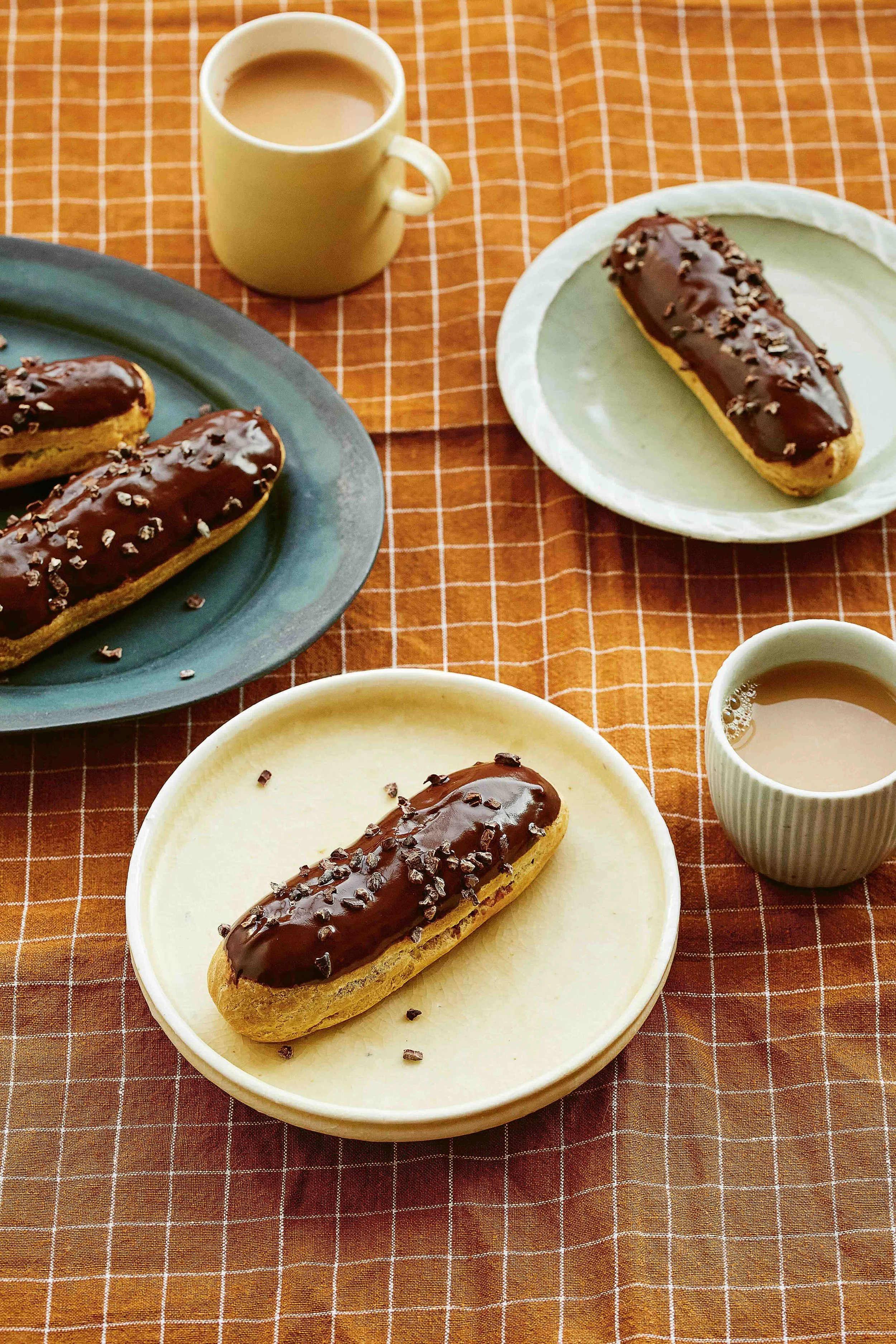
“Whilst the combination of dark chocolate and raspberry is incredibly popular, it isn’t really one I enjoy; I find the balance of flavour is often wrong and the whole thing tastes too acidic. When it comes to pairing dark chocolate with a berry my preferred partner is blackberry. I also like to add a hint of liquorice, which helps bring together the flavours of the fruit and chocolate.“– Edd Kimber
Makes 10
Blackberry star Anise Jam
300g blackberries
225g (1 cup + 2 tbsp) caster sugar
4 tbsp lemon juice
3 star anise
Dark Chocolate Pastry Cream
100g (scant ½ cup, packed) light brown sugar
20g (2½ tblsp) cornflour
15g (3 tbsp) cocoa powder (dutched or natural)
300ml (1¼ cups) whole milk
3 large egg yolks
¼ tsp fine sea salt
15g (1 tbsp) unsalted butter, diced
100g dark chocolate (65–85% cocoa solids, depending on recipe), finely chopped
Choux Pastry - Enough for 15 choux buns or 10 éclairs
70g (½ cup + 1 tbsp) plain flour
100ml (⅓ cup + 1 tbsp) water
40ml (2½ tbsp) whole milk
½ tsp fine sea salt
½ tsp caster sugar
70g (5 tbsp) unsalted butter, diced
2 large eggs, lightly beaten
Craquelin
50g (¼ cup) caster sugar
50g (⅓ cup + 1 tbsp) plain flour
pinch of fine sea salt
50g (3½ tbsp) unsalted butter, diced and chilled
Chocolate Glaze
75g dark chocolate (60–70% cocoa solids)
20g (1½ tbsp) unsalted butter, diced
½ tbsp liquid glucose (or corn syrup or honey)
To Finish
cocoa nibs or grated chocolate
Blackberry star Anise Jam
To make the jam, put all the ingredients into a medium saucepan, place over a high heat and bring to a rolling boil. Cook for 10–15 minutes or until the jam reaches 104°C. You can also test the jam is fully cooked by spooning a little onto a plate which has been chilled in the freezer. Leave for a minute before pressing with your finger; if the jam wrinkles it is ready. If not, cook a little longer. Pour the jam into a sterilised jar and refrigerate until needed.
Dark Chocolate Pastry Cream
Pastry cream is a true staple, and although it’s incredibly simple to make, because it is used in so many recipes it is important to learn how to do so properly. As the custard is thickened with cornflour (cornstarch), scrambling the eggs is less likely than with a thin custard such as crème anglaise, making it a much more user-friendly technique. The two biggest tips are firstly to whisk continuously once the custard is added to the hot pan and, secondly, to continue cooking it for a minute or so after it is bubbling and thickened, as this ensures the amylase enzyme in the eggs is deactivated. If this step is skipped, the thickening powers of the cornflour can be affected, resulting in a thinner custard than required.
Sift half the sugar, all the cornflour and cocoa (if making the dark chocolate version) into a large bowl and whisk to combine. Put the milk, vanilla (if making the white chocolate version) and the remaining sugar in a saucepan, whisk to combine, place over a medium heat and bring to a simmer. Add the egg yolks and salt to the bowl with the cornflour mix and whisk until the mixture is smooth.
Pour the hot milk mixture over the egg mixture, whisking to combine. Pour this mixture back into the saucepan and place back on the heat. Cook, whisking constantly, until the custard is very thick and is bubbling. Continue cooking for another minute before scraping into a bowl. Add the butter and chocolate and whisk to combine. Cover with cling film (plastic wrap) and refrigerate until needed.
Pastry cream can be made a day in advance and refrigerated until needed.
Choux Pastry & Craquelin
This pastry is synonymous with French baking, being used in many traditional recipes, such as éclairs and Paris-Brest. Whilst never strictly necessary, when making choux I often add a layer of craquelin to the pastry before baking. This thin dough is made like a crumble or streusel but rolled out until thin. As the pastry bakes the craquelin melts onto the choux, ensuring it rises to its maximum potential. The craquelin then sets and creates a crisp outer layer, adding even more texture to the pastry.
Sift the flour, and cocoa (if making the cocoa version), onto a piece of baking parchment or into a small bowl. Put the water, milk, salt, sugar and butter in a saucepan, place over a low heat until the butter is melted, then increase the heat and bring to a rolling boil. Add the flour, and cocoa, if using, all at once, stirring vigorously with a spatula to form a dough. Continue to stir on the heat for 1–2 minutes or until a thin film has formed on the bottom of the pan. If using a non-stick pan, this film may not develop but what actually matters is that the temperature of the dough is raised.
Tip the dough into a bowl and beat for a few minutes to cool slightly. Add the eggs, a little at a time, beating until fully combined before adding more. You want to add enough egg so that the finished dough is smooth, a little glossy and, when lifted from the bowl, falls from the spatula in a V-shaped ribbon. If too little is added the choux won’t rise, if too much is added it will rise but then collapse. scrape the pastry into a piping bag fitted with a piping tip and use as per your recipe.
Choux pastry can be made up to 24 hours in advance, stored in the refrigerator until needed. Make sure it is covered well with a layer of cling film (plastic wrap) so that it doesn’t develop a skin. If you find piping tricky, chilling the pastry also thickens it up slightly, making it a little easier to handle.
To make the craquelin, put the sugar, flour and salt in a bowl and whisk to combine. Add the butter and rub into the flour until a crumbly dough is formed, then use your hands to gently press into a uniform dough with no lumps of butter. Roll out between two sheets of baking parchment until a thickness of 2 mm. Transfer to the freezer until needed. At this point the craquelin can be frozen for up to a month (if freezing for more than a day it is best to wrap the tray in cling film (plastic wrap).
When you are ready to pipe your choux pastry, remove the craquelin from the freezer and cut into the desired shape(s). If adding to round choux buns, cut into discs using a cookie cutter, cutting them the same size as the piped rounds of pastry. If adding to éclairs, cut into small rectangles, roughly the same length and width as the piped éclairs.
Craquelin becomes very soft if left at room temperature, so use it quickly before it has a chance to warm up.
Preheat the oven to 220°C/200°C fan.
Line a large baking tray (pan) with baking parchment and, on the back of the parchment, draw ten 12 cm (5 in) lines to act as your template. Scrape the choux pastry into a piping bag fitted with a 16 mm (½ in) French star piping tip. If you don’t have one of these, a round piping tip of roughly the same diameter will also work. Pipe ten éclairs, using the lines as a guide.
To ensure my éclairs rise evenly and don’t crack, I spray a very thin layer of oil (the type used to line cake tins) over them and then dust with a thin layer of icing sugar. Alternatively, lightly brush them with a little beaten egg. Place the éclairs in the oven, close the door and immediately reduce the heat to 180°C/160°C fan. Bake the éclairs for 35–40 minutes until golden. Turn off the oven and open the door briefly to allow any steam to escape. Allow the éclairs to slowly cool down, in the oven, for 30 minutes. remove and allow to cool fully.
To assemble, make three small holes along the length of the bottom of each éclair. Remove the pastry cream from the refrigerator, beat until smooth and scrape into a piping bag fitted with a small round piping tip. Scrape the jam into a second piping bag, also fitted with a small round piping tip. Pipe a little jam into each hole of the éclair and repeat with the pastry cream, filling until the cream starts to escape, scraping off any excess.
To make the glaze, put all the ingredients in a small bowl set over a pan of simmering water and cook until everything is melted and smooth. set aside until slightly thickened. Dip the top of each éclair into the chocolate, allowing any excess to drip back into the bowl. Sprinkle over a few cocoa nibs or grated chocolate.
Once assembled the éclairs are best on the same day, but all the elements can be made up to 2 days in advance, if needed.
Note: Depending on which recipe the pastry cream will be used in, you can use chocolate with a varied percentage of cocoa. Generally I use either a 60–70% dark chocolate for an everyday pastry cream or I use a chocolate with 85% cocoa solids when I want something a little more intense and grown up, as in my Dark Chocolate Choux a la Custard recipe on page 151.
Tip: Éclairs conform to the shape they’re piped, which means the neater you can pipe them the better the finished shape will be. Try to use a steady hand and apply even pressure as you pipe.
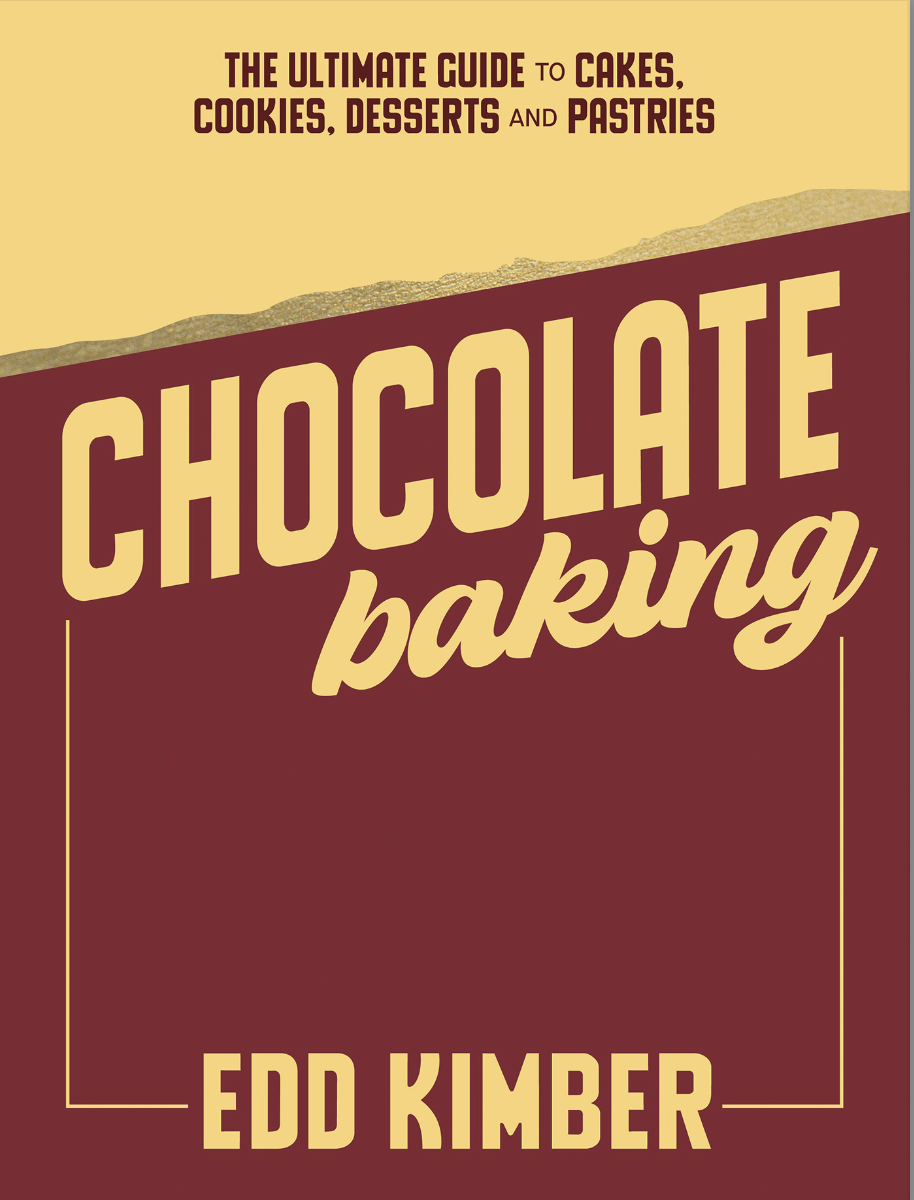
This is an edited extract of Chocolate Baking by Edd Kimber. Published by Quadrille.
📷 Matthew Hague.